


 English
  Français
  Español
  简体中文
简体中文
 简体中文
简体中文
PEEK CNC machining is one of the most dependable routes to tight-tolerance, high-performance plastic parts. Unlike basic polymers, PEEK retains its mechanical properties at high temperatures, resists aggressive chemicals, and still cuts cleanly when the right parameters are used. For medical device engineers, this combination is hard to beat.
Content
- 1 What Makes PEEK a Strong Candidate for CNC Machining?
- 2 PEEK CNC Machining Best Practices: What Works in Real Production
- 3 Medical-Grade PEEK Machining: What Changes?
- 4 Where CNC Machined PEEK Parts Are Used in Medical Devices
- 5 About Ningbo LINSTANT Polymer Materials Co., Ltd.
- 6 Frequently Asked Questions about PEEK CNC Machining
What Makes PEEK a Strong Candidate for CNC Machining?
PEEK (polyether ether ketone) is a semi-crystalline thermoplastic with a continuous service temperature around 260°C and a melting point near 343°C. It offers high tensile and flexural strength, excellent creep resistance, and low moisture absorption, which gives machined parts outstanding dimensional stability. These properties explain why industries from aerospace to medical rely on PEEK for components that must withstand repeated sterilization, chemical exposure, and mechanical stress.
Machinists also appreciate that PEEK is available in several grades - unfilled, glass-filled, carbon-fiber-filled, and medical grade. The choice affects chip formation, tool wear, and final part properties. Unfilled PEEK is the easiest to machine and gives a clean surface, while reinforced grades add stiffness but require tougher tooling. The semi-crystalline structure also means parts retain their mechanical performance after sterilization cycles, which is a deciding factor for reusable medical instruments.
PEEK CNC Machining Best Practices: What Works in Real Production
PEEK behaves differently from metal or standard plastics. It produces long, stringy chips rather than broken chips, so chip control is essential. The material is also sensitive to heat: too much friction can cause local melting or surface roughness.
- Use sharp carbide or polycrystalline diamond (PCD) tools. Carbide is enough for most jobs; PCD reduces wear when machining filled PEEK.
- Feed and speed matter. A common starting point is 100-150 m/min cutting speed with light chip loads, but always confirm with the material supplier.
- Keep the cutting zone cool with air or, where allowed, flood coolant. This prevents stress-induced cracking and preserves tolerance.
- Consider annealing the PEEK blank before finishing. Annealing at 200-220°C releases internal stresses and improves dimensional stability.
- Remove stringy chips frequently to avoid wrapping around the tool.
For tube-shaped components, additional care is needed to avoid wall collapse. Detailed sawing and facing advice is available in our guide on how to cut PEEK tubing.
In practice, a conservative approach - slower spindle speed, sharper tool, and continuous coolant - yields the most consistent results. When the geometry includes thin walls, reduce feed rate before changing tool geometry.
Medical-Grade PEEK Machining: What Changes?
Medical device manufacturers cannot treat PEEK the same way as an industrial component. The raw material must meet biocompatibility requirements such as USP Class VI or ISO 10993, and the machining process must protect the part from contamination. This means dedicated equipment, filtered air, and disciplined cleanroom operating procedures.
| Factor | Industrial PEEK | Medical PEEK |
|---|---|---|
| Material certification | Standard datasheet | USP Class VI / ISO 10993 |
| Environment | Standard shop | Cleanroom (ISO 7 or better) |
| Tooling restrictions | Standard coolants allowed | Minimize lubricant contamination |
| Documentation | Basic inspection | Full batch traceability and DHR |
| Typical use | Aerospace, automotive | Catheters, surgical instruments, implants |
In our experience, the transition from industrial to medical-grade machining is about more than the material certificate. It requires operators who understand how a single burr can compromise a device. This is why LINSTANT runs validated processes with documented traceability for every batch.
Where CNC Machined PEEK Parts Are Used in Medical Devices
CNC machined PEEK appears throughout modern medical devices. You will find it in catheter fittings, endoscope handles, surgical tool insulators, and components for heart-assist pumps. Its ability to be sterilized again and again, without losing mechanical performance, makes it an ideal metal replacement.
PEEK also performs well under compressive load, so it appears in valve seats, pump housings, and clamping mechanisms where dimensional stability is critical. For prototypes, CNC machining is often the fastest way to validate a design before moving to injection molding.
If you are prototyping a new device or moving into production, LINSTANT can support you with several PEEK product forms designed to integrate directly into a CNC workflow:
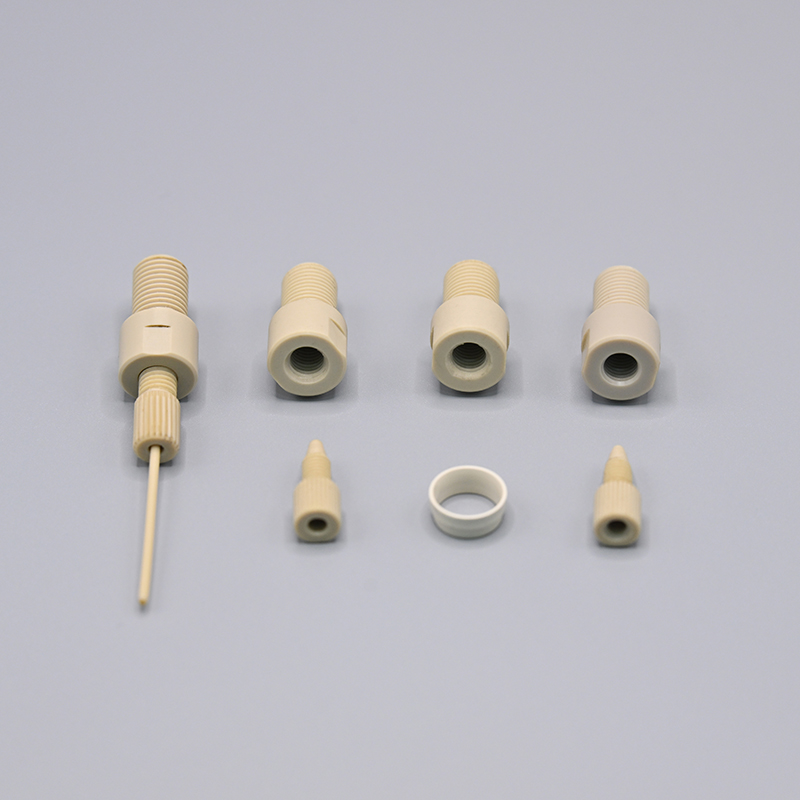 CNC-Machined PEEK Components for Medical Device ManufacturingThis product listing covers PEEK machined parts suited for CNC workflows, offering high precision, biocompatibility, and heat resistance. It is relevant here as a direct option for prototyping or production runs.View Product →
 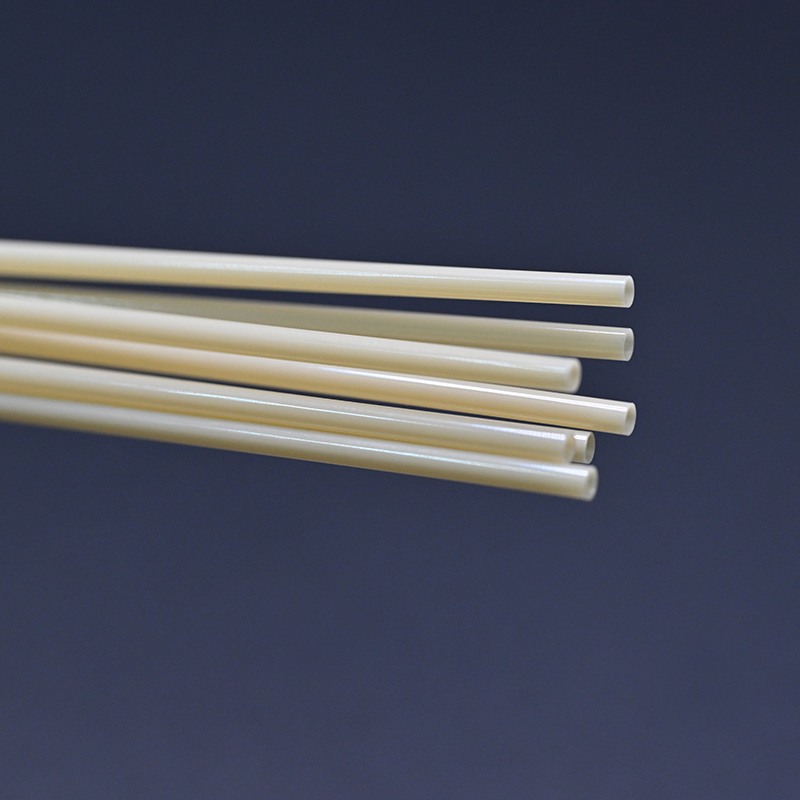 PEEK Tubing with Precise Dimensional Tolerances and Multi-Lumen OptionsExplore PEEK tubing with inner diameters from 0.10 mm and temperature resistance above 250°C, plus multi-lumen and balloon tubing variants. Ideal for cardiovascular, spinal, and other interventional applications.View Product →
 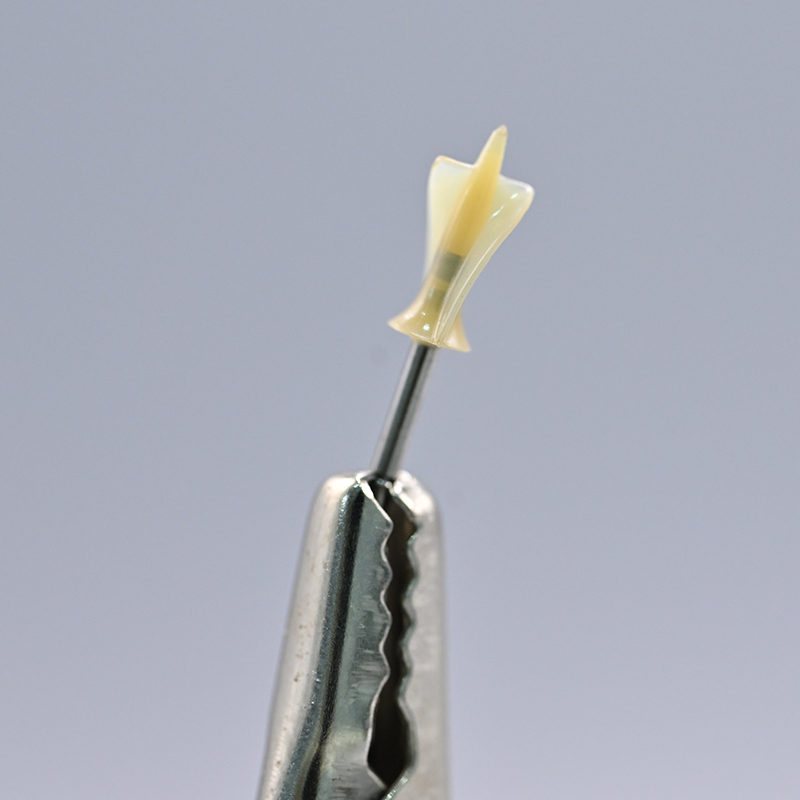 PEEK Injection Molding Services for High-Temperature, Sterilizable Implant ComponentsPEEK injection molding enables clean-room production, close-to-bone modulus, and radiolucency. This service is highlighted for projects requiring complex geometries, cost control, and compliance with implant regulations.View Product →
About Ningbo LINSTANT Polymer Materials Co., Ltd.
Ningbo LINSTANT Polymer Materials Co., Ltd. was established in 2014 and has since grown into a national-level high-tech enterprise with over 500 professional staff members. The company is committed to transcending the role of a traditional component supplier, striving to become an integral part of its customers' products. From precise matching during the collaborative design phase to reliability assurance during manufacturing, LINSTANT deeply integrates into the core value chain of its customers' products, transforming catheter technology into a core competitive advantage for their products.
Through continuous technological innovation and stringent quality control, we are capable of providing medical device companies with safer, more precise, and more technologically advanced customised catheter system solutions.
In addition to CNC-machined PEEK parts, LINSTANT offers extrusion, molding, secondary operations, and surface treatment under one roof. Visit our OEM/ODM page to see how we handle custom projects from design to validation.
Frequently Asked Questions about PEEK CNC Machining
Is PEEK difficult to CNC machine?
No. With sharp tools and controlled heat, PEEK machines predictably and produces clean, tight-tolerance parts.
What is the best PEEK grade for CNC machining?
Unfilled natural PEEK is easiest to machine; carbon-filled PEEK adds stiffness but accelerates tool wear.
What tolerances can you achieve with PEEK machining?
Small machined PEEK parts commonly hold ±0.05 mm. Larger or thin-wall parts may need ±0.1 mm.
How does PEEK compare with PTFE or PI?
PEEK is stronger and stiffer than PTFE and easier to machine than PI, while still offering excellent thermal resistance.
Is machined PEEK safe for medical devices?
Yes, when you use medical-grade PEEK and manufacture under cleanroom conditions with proper process controls.
Why is PEEK so popular in medical manufacturing?
It survives repeated sterilization, withstands chemicals, and maintains mechanical integrity under long-term loading.


