


 English
  Français
  Español
  简体中文
简体中文
 简体中文
简体中文
You are at the final stage of designing a new guiding catheter. The shaft pushes well, the curve shape holds its track, but the tip keeps catching on the simulated anatomy at the first bend. In most cases, the problem is not the shaft design or the polymer blend, it is the tip forming step.
Tip forming is not a cosmetic finishing operation. It is the process that determines whether a device can safely navigate tortuous vessels, cross a narrow lesion, or access a distal branch without causing trauma. For medical device engineers, the message is simple: get the tip right first, and the rest of the device has a chance to work.
Content
- 1 What is Catheter Tip Forming?
- 2 Why Tip Forming Quality Cannot Be Neglected
- 3 Choosing Materials for Tip Forming
- 4 Common Tip Forming Defects and How to Prevent Them
- 5 About LINSTANT: A Custom Catheter System Partner
- 6 From Drawing to Production: How to Scale a Tip Forming Design
- 7 Frequently Asked Questions About Catheter Tip Forming
What is Catheter Tip Forming?
Catheter tip forming is a heat-based secondary operation. A pre-extruded tube is placed into a forming tool, heated until the polymer softens, reshaped to a target geometry, and then cooled to lock the shape. The process is controlled by four independent variables:
- Heating temperature and ramp profile
- Mold gap and dwell time
- Axial force, vacuum, or internal air pressure
- Cooling rate and post-cooling deviation
On a practical level, tip forming takes the distal end of a catheter and turns it into a taper, dome, flare, or curved shape. The choice of geometry follows the intended clinical function. A soft taper helps track over a guidewire, a dome tip protects the vessel wall, and a curved tip helps redirect the device.
Where Tip Forming Sits in the Production Flow
Tip forming usually comes after extrusion and braiding, and before assembly of the hub or finally bonded components. That means any defect found during tip forming affects upstream yields as well. A disciplined process design prevents rework loops.
Isometric illustration of a catheter tip forming mold, showing the tube, tip geometry, heating zone, and upper/lower mold halves.
Why Tip Forming Quality Cannot Be Neglected
Catheter tip forming affects more than the device's appearance. It has direct consequences for:
- Vascular safety. A sharp edge or burr on the tip can dissect a vessel wall or cause embolization.
- Trackability and crossability. A well-formed taper translates torque and push force more efficiently across a tortuous path.
- Guidewire and device compatibility. Tip geometry controls how easily a wire or another device passes through the lumen.
- Imaging performance. A flashing or irregular tip can create artifacts in fluoroscopy or OCT assessment.
- Assembly robustness. Deviations in tip dimensions make it difficult to bond a radiopaque marker or join a distal section.
In short, tip forming is the last line of defense between a good device and a good design. That realization drives why leading manufacturers invest in process characterization for this step.
Choosing Materials for Tip Forming
Material selection drives the process window more than any other variable. Each polymer family has its own thermal behavior, melt strength, and shrinkage profile.
The Workhorse Polymers: Pebax, TPU, and Nylon
Pebax (polyether block amide) is the most common material for soft catheter tips. Its shore hardness range of 25D to 72D lets engineers balance flexibility and torque transfer. A typical forming window sits between 150°C and 210°C, which is low enough to reduce thermal damage but high enough to shape the tip quickly.
TPU (thermoplastic polyurethane) offers excellent abrasion resistance and can be formulated with radiopaque fillers. TPU tips are commonly formed in the 160–220°C range. Its lower melt strength demands a tighter mold gap to avoid sagging.
Nylon (polyamide) provides higher column strength and is often used in structurally demanding tips. However, moisture sensitivity can produce surface defects, so dry-air conditioning is essential before forming.
High-Performance Options: PEEK and Polyimide
PEEK is an excellent choice for devices that need high fatigue strength and temperature resistance. Tip forming of PEEK requires mold temperatures in the 340–400°C range. Because PEEK expands more than standard engineering plastics, the mold gap needs to be looser to prevent sticking or galling.
Polyimide is not melt-formable. Its value lies in thin-wall, heat-stable shafts. For tip forming, manufacturers usually rely on adhesive or solvent-based techniques instead.
Fluoropolymers: Low Friction, Limited Formability
PTFE and FEP offer the best lubricity and chemical resistance, but they do not flow in a standard tip-forming mold. PTFE cannot be melt processed at all. In practice, a fluoropolymer tip is achieved by bonding a separate low-friction distal section or by using heat-shrink technology.
| Material | Shore Hardness | Forming Temp | Key Risk |
|---|---|---|---|
| Pebax | 25D–72D | 150–210°C | Thermal degradation |
| TPU | 80A–95A | 160–220°C | Melt sagging |
| Nylon | 30D–65D | 170–230°C | Moisture sensitivity |
| PEEK | 80D–90D | 340–400°C | Overheating / sticking |
| Polyimide | Rigid | Not formable | Adhesion issues |
| PTFE / FEP | 50D–55D | Not melt-formable | No melt processing |
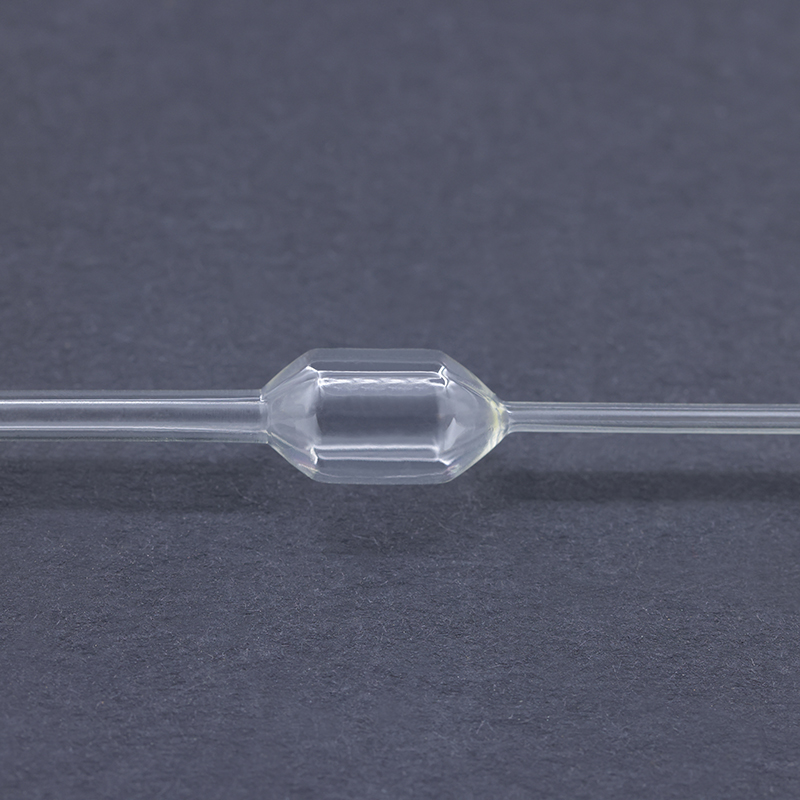 Precision Balloon Tubing for Medical CathetersBalloon tubing with tight tolerances down to ±0.01 mm and multi-layer options up to 55 atm burst pressure. Suitable for balloon dilatation catheters in cardiovascular and minimally invasive procedures, offering consistent mechanical properties.View Product →
Temperature ranges are typical values for medical-grade polymers, summarized from common engineering references and LINSTANT process engineering data.
When a tip has to work with a balloon, the choice of balloon tubing grade affects the overall assembly. Many engineers look for a partner that can supply balloon tubing with a consistent tip-forming response. LINSTANT's medical balloon tubing portfolio includes single-layer, double-layer, and triple-layer options precisely because the tip is where different wall structures meet.
Common Tip Forming Defects and How to Prevent Them
In a production setting, tip forming defects fall into a few recurring families. Recognizing them early prevents systematic scrap.
| Defect | Root Cause | Countermeasure |
|---|---|---|
| Burr / flash | Mold gap too large or temperature too high | Reduce gap, lower temp, adjust cooling rate |
| Dimensional inconsistency | Uneven heating or material batch variation | Requalify heat profile, verify material lot |
| Wall thickness variation | Misaligned mold or eccentric tube | Align tooling, check tube concentricity |
| Dull or wavy surface | Wrong cooling rate or excessive dwell time | Shorten dwell, optimize cooling curve |
| Closed / collapsed tip | Excess vacuum or overpressure | Balance internal pressure and venting |
| Welding line | Flow front collision in a multi-layer tip | Adjust mold geometry or material combination |
For micro catheters, tip forming control is even more demanding because the wall thickness is often below 0.2 mm. A 5°C temperature variation can turn a clean taper into a soft, non-functional tip. Proper micro catheter tip forming usually involves infrared or RF heating with closed-loop temperature monitoring.
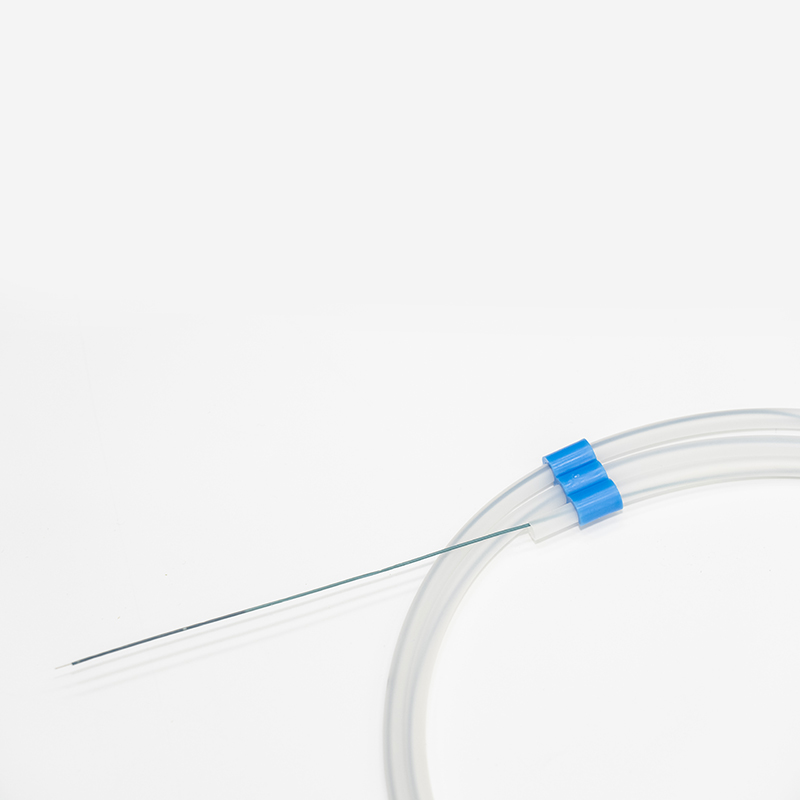 Reinforced Micro Catheter for Minimally Invasive SurgeryMicro catheter with outer diameter under 1 mm, customizable hardness and diameter changes for navigating tortuous vessels. Rounded tip reduces trauma, making it ideal for neurointervention, cardiovascular, and tumor treatments.View Product →
When you are working with PEEK tubing, the risk of overheating is real. Advanced tooling is required to form PEEK without charring or losing its mechanical properties. For details on this specific material, see our article on tip forming PEEK medical tubing.
About LINSTANT: A Custom Catheter System Partner
Ningbo LINSTANT Polymer Materials Co., Ltd. was established in 2014 and has since grown into a national-level high-tech enterprise with over 500 professional staff members. The company is committed to transcending the role of a traditional component supplier, striving to become an integral part of its customers' products. From precise matching during the collaborative design phase to reliability assurance during manufacturing, LINSTANT deeply integrates into the core value chain of its customers' products, transforming catheter technology into a core competitive advantage for their products.
Through continuous technological innovation and stringent quality control, we are capable of providing medical device companies with safer, more precise, and more technologically advanced customised catheter system solutions.
LINSTANT operates a nearly 20,000 m² GMP-compliant cleanroom, with 15 imported extrusion lines, 8 dedicated PEEK extrusion lines, 2 injection molding lines, and close to 100 sets of braiding, spring, coating, and welding equipment. This capacity supports both small-scale pilot production and sustained volume delivery.
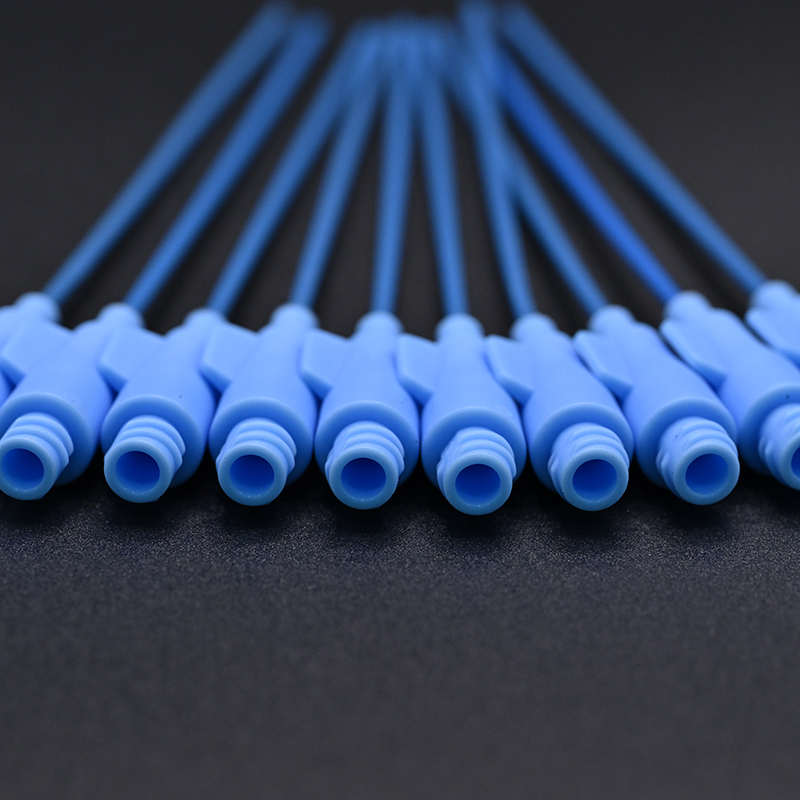 High-Torque Guiding Catheter with Braided StructureGuiding catheter featuring multi-stage hardness, soft distal tip, and braided shaft for superior torque and stability. Ultra-thin wall and PTFE inner layer ensure smooth device delivery, supported by GMP-compliant cleanroom production.View Product →
From Drawing to Production: How to Scale a Tip Forming Design
Bringing a tip forming specification into production requires more than a mold. It requires process characterization, first article inspection, and controlled production parameters. A good partner will define the process window, document critical process parameters, and support validation activities.
LINSTANT's OEM/ODM services cover the full path from material selection and tooling to pilot runs and serial production. For European and North American device teams, the benefit is a single supplier with in-house extrusion and secondary processing, which reduces transfer risks and shortens lead times.
Frequently Asked Questions About Catheter Tip Forming
Q1. What is catheter tip forming?
Catheter tip forming is a heat-based process that shapes the distal end of a medical tube into a taper, dome, or other functional geometry for navigation and clinical safety.
Q2. Which materials work best for tip forming?
Pebax, TPU, nylon, and PEEK are commonly used. Polyimide and PTFE typically require adhesive bonding or mechanical methods instead of heat forming.
Q3. What causes tip forming defects?
Uneven heating, poor mold alignment, excess pressure, and incompatible material grades are the most frequent root causes of burrs, flash, or dimensional issues.
Q4. How is tip forming quality checked?
Optical inspection, dimensional measurement, leak testing, and burst pressure testing are usually combined to verify the formed tip.
Q5. Does LINSTANT offer custom tip forming?
Yes. LINSTANT's OEM/ODM program supports custom tip forming from the design stage through tooling development and volume production.
Q6. What is the difference between tipping and tip forming?
Tipping generally refers to the initial shaping of the tube end, while tip forming includes the full distal profile definition, including heating, shaping, cooling, and finishing.


