


 English
  Français
  Español
  简体中文
简体中文
 简体中文
简体中文
Choosing between polyamide and polyimide for a medical catheter component is a decision that impacts device performance, manufacturing cost, and regulatory risk. The practical answer is straightforward: polyamide is the right choice when flexibility, kink resistance, and budget are the priority; polyimide is the right choice when thin-wall strength, thermal stability, and dimensional precision are critical.
The molecular difference explains the performance gap. Polyamide consists of flexible amide chains that make the material tough and ductile but limit its heat resistance. Polyimide contains rigid imide rings that withstand far higher temperatures but reduce elongation at break. In this article, we compare both polymers across the properties that matter most in medical tubing and catheter manufacturing.
Content
- 1 What Is Polyamide (PA)?
- 2 What Is Polyimide (PI)?
- 3 Polyamide vs Polyimide: Head-to-Head Comparison
- 4 Mechanical and Thermal Properties in Practice
- 5 Cost and Procurement Considerations
- 6 Selecting the Right Material for Catheter Tubing
- 7 About Ningbo LINSTANT Polymer Materials Co., Ltd.
- 8 FAQs About Polyamide vs Polyimide in Medical Devices
- 8.1 1. Is polyamide the same as polyimide?
- 8.2 2. Which material is better for catheter shafts?
- 8.3 3. What is the main drawback of polyimide?
- 8.4 4. Can polyamide withstand autoclave sterilisation?
- 8.5 5. How do they compare for electrical insulation?
- 8.6 6. Are polyimide tubes available in medical grade?
What Is Polyamide (PA)?
Polyamide, commonly known as nylon, is a semi-crystalline thermoplastic with repeating amide bonds. The most common medical grades are PA11 and PA12, which offer a balance of toughness, flexibility, and processability. PA6 and PA66 are also used in non-implantable device components where higher stiffness is required.
Key properties of polyamides include:
- Tensile strength between 50 and 90 MPa, varying with moisture content and grade.
- High elongation at break, often exceeding 200% for PA12, which gives excellent kink resistance in thin-wall tubing.
- Continuous service temperature of 100 to 120°C, with short-term peaks around 150°C.
- Water absorption of 1 to 3%, which can cause dimensional change and a slight reduction in stiffness.
- Low material cost and excellent extrudability, making it a default choice for cost-sensitive components.
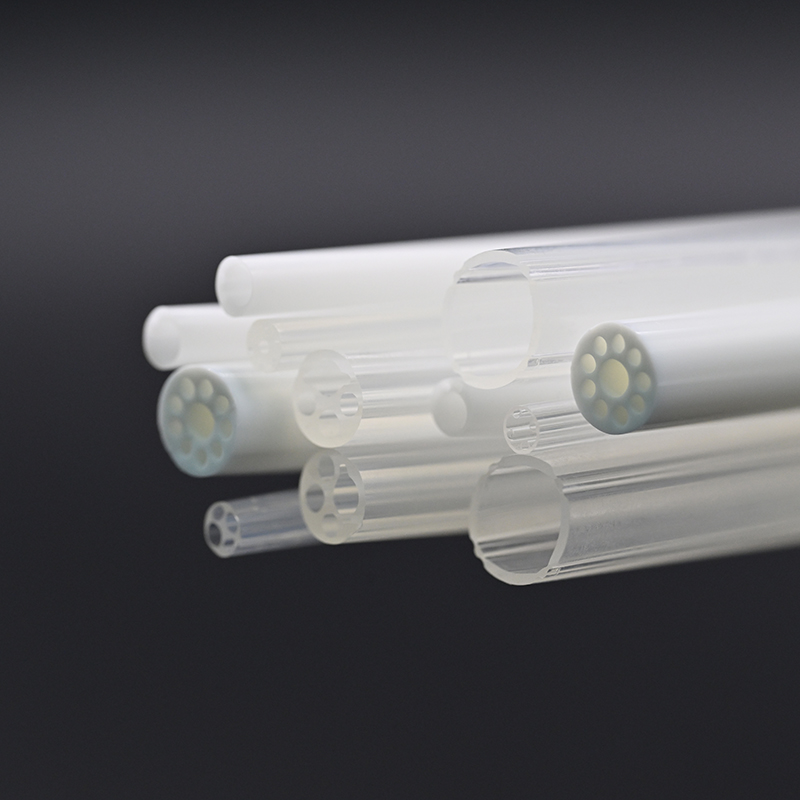 Multi-lumen Tubing for Simultaneous Access in Medical CathetersMulti-lumen tubing features multiple channels within a single tube, enabling simultaneous passage of guidewires, medications, and gases. It offers customizable lumen configurations up to 10, good mechanical properties, and biocompatibility, making it suitable for complex interventional procedures.View Product →
In medical device manufacturing, polyamide is widely used for flexible catheter shafts, balloon tubing, and multi-lumen extrusion. PA tubes are frequently co-extruded with other polymers to create a device with a soft, kink-resistant body and a rigid proximal section. Polyamide also works well in heat-shrink applications, where its low melting point and good bondability create reliable joints.
What Is Polyimide (PI)?
Polyimide is a high-performance polymer with imide rings in its backbone. It is available in both thermoset and thermoplastic forms, and it is used in medical devices primarily as a thin-wall tubing material for catheter shafts, guide catheters, and micro catheters.
Key properties of polyimides include:
- Tensile strength of 120 to 200 MPa in drawn or reinforced grades.
- Continuous service temperature of 250 to 300°C, with short-term peaks above 400°C.
- Low elongation at break (5 to 15%), providing high pushability and torque transmission.
- Moisture absorption below 0.3%, keeping dimensions stable in humid environments.
- Exceptional resistance to hydrolysis, solvents, gamma radiation, and EtO sterilisation.
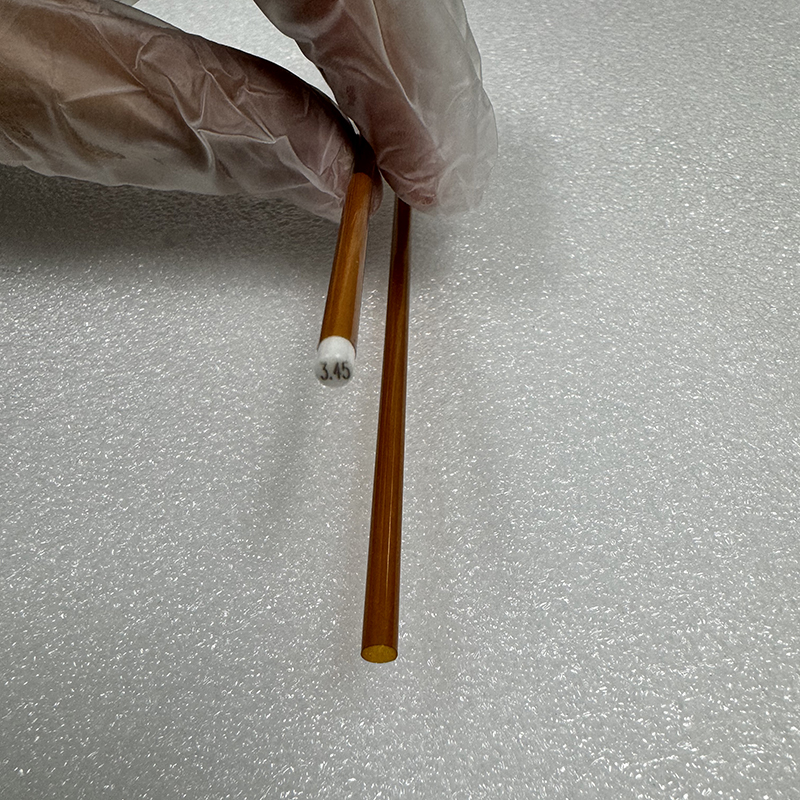 Medical Polyimide Tubing with Thin Walls and High ModulusMedical polyimide tubing combines strength, wear resistance, and ultra-high temperature tolerance. Its thin walls maximize inner lumen while maintaining high modulus, preventing buckling in tortuous anatomy, ideal for neurovascular and coronary catheters.View Product →
The combination of high modulus and thin wall is what makes polyimide so attractive for neurovascular catheters, coronary micro catheters, and guide catheters. A thinner wall for the same outer diameter gives a larger inner lumen for wire crossing, while the high modulus prevents buckling during navigation through tortuous anatomy.
Polyamide vs Polyimide: Head-to-Head Comparison
When these two materials are placed side by side, the differences in performance and cost become immediately visible. The table below summarises the key engineering properties that device manufacturers have to evaluate during material selection.
| Property | Polyamide (PA) | Polyimide (PI) |
|---|---|---|
| Chemical structure | Amide bonds | Imide rings |
| Continuous service temperature | 100-120°C | 250-300°C |
| Tensile strength | 50-90 MPa | 120-200 MPa |
| Elongation at break | 100-300% | 5-15% |
| Water absorption | 1-3% | <0.3% |
| Radiation resistance | Moderate | Excellent |
| Chemical resistance | Good to common solvents | Excellent to most chemicals |
| Relative material cost | 1x | 5-10x |
| Processing method | Extrusion, injection moulding | Solution casting, specialised extrusion |
The thermal gap is the most obvious differentiator. Based on published material datasheets, polyamide tops out at around 120°C continuous service, whereas polyimide can operate up to 300°C. For medical devices that undergo heat-sealing, laser welding, or high-temperature tip-forming, this difference is decisive.
Mechanical and Thermal Properties in Practice
In real-world catheter design, the mechanical behaviour of a polymer tube is defined by tensile strength, elongation at break, and flexural modulus. Polyamide's high elongation makes a 0.15 mm wall tube extremely kink-resistant when bent around an 8 to 10 mm radius. Polyimide's high tensile strength and low elongation allow a 0.05 mm wall tube to carry the torque and pushing force needed to reach distal anatomy, but it can kink if bent sharply.
This is why many device designers use a composite approach. A polyimide shaft provides pushability and torque response, while a softer polymer—often polyamide or Pebax—is bonded to the distal section to improve flexibility and trackability. A PI-reinforced tube with a polyamide outer layer combines the advantages of both materials: thin-wall stiffness for navigating tortuous anatomy and a flexible, kink-resistant tip for safe crossing.
For a deeper look into where PI wins in catheter design, read our article on the key performance characteristics of medical polyimide tubing.
Cost and Procurement Considerations
Cost is often the deciding factor for non-critical applications. Polyamide resin typically costs about one-fifth to one-tenth as much as polyimide material of the same volume. However, the total component cost does not scale linearly. Polyimide tubes can be extruded to very thin walls, which reduces material usage per unit length. For a device where the catheter profile must be smaller than one French size, the performance benefit of polyimide far outweighs the price premium.
From a purchasing perspective, it is important to ask about traceability and tolerance. Medical polyimide tubing is available with ID/OD tolerances down to ±0.01 mm, while polyamide tubing typically has a tolerance of ±0.02 to ±0.05 mm. These tolerances directly affect final device performance and should be part of the specification review during supplier qualification.
Another procurement factor is yield. Polyimide is stiffer and more fragile in thin-wall form, so it is usually handled in batch quantities and may have a higher scrap rate during winding or laser processing. Polyamide, by contrast, processes more forgivingly and is often supplied in continuous coils, which can reduce labour time in high-volume production.
Selecting the Right Material for Catheter Tubing
When choosing between polyamide and polyimide, use this quick decision guide:
Choose polyamide (PA) when:
- The device needs a soft, flexible, and kink-resistant distal section.
- The manufacturing process does not expose the tube to temperatures above 120°C.
- Material cost is the dominant procurement constraint.
- The component is part of a multi-layer co-extrusion where bond strength and bondability are needed.
Choose polyimide (PI) when:
- The catheter has to reach deep vascular anatomy with high torque and pushability.
- The tube wall needs to be as thin as possible to maximise the inner lumen.
- The device undergoes heat-based processing such as tip-forming, welding, or heat sealing.
- Sterilisation involves gamma irradiation, where PI shows exceptional stability.
For further context, see our discussion on whether polyimide tubing has enough flexibility for catheter applications.
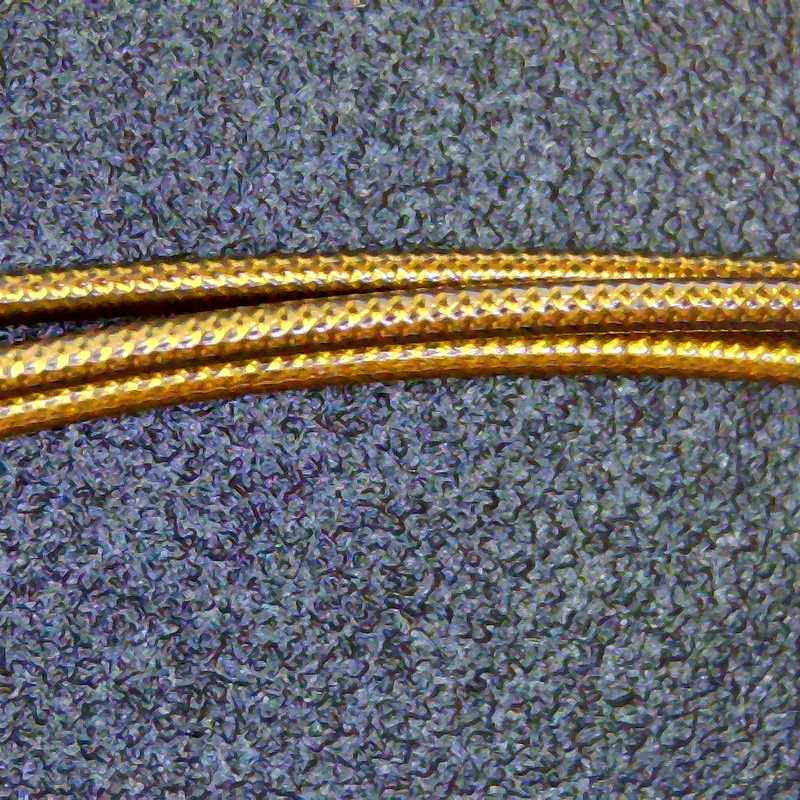 PI Reinforced Tubing with Braided Layer for Enhanced PushabilityPI reinforced tubing integrates a braided or coiled layer within the polyimide wall, improving torsion control, flexibility, and pushability. This composite structure offers balanced stiffness and softness, suitable for catheters requiring precise navigation and pressure resistance.View Product →
LINSTANT supplies both medical polyimide tubing and PI reinforced tubing, allowing device manufacturers to combine the stiffness of PI with the flexibility of other polymers in a single, customised catheter system.
About Ningbo LINSTANT Polymer Materials Co., Ltd.
Ningbo LINSTANT Polymer Materials Co., Ltd. was established in 2014 and has since grown into a national-level high-tech enterprise with over 500 professional staff members. The company is committed to transcending the role of a traditional component supplier, striving to become an integral part of its customers' products. From precise matching during the collaborative design phase to reliability assurance during manufacturing, LINSTANT deeply integrates into the core value chain of its customers' products, transforming catheter technology into a core competitive advantage for their products.
Through continuous technological innovation and stringent quality control, we are capable of providing medical device companies with safer, more precise, and more technologically advanced customised catheter system solutions.
FAQs About Polyamide vs Polyimide in Medical Devices
1. Is polyamide the same as polyimide?
No. Polyamide (nylon) uses amide bonds, while polyimide uses imide rings. They differ significantly in thermal stability, mechanical strength, and cost.
2. Which material is better for catheter shafts?
Polyimide is better for thin-wall, high-pushability shafts. Polyamide is better for flexible, kink-resistant distal sections.
3. What is the main drawback of polyimide?
Cost and brittleness. PI is expensive and has low elongation at break, so it can kink or crack under sharp bending.
4. Can polyamide withstand autoclave sterilisation?
Standard PA grades degrade at high humidity and temperatures above 150°C. Heat-stabilised PA12 can handle repeated cycles around 120-130°C.
5. How do they compare for electrical insulation?
Polyimide is a superior dielectric with stable insulation up to 250°C. Polyamide absorbs moisture, which reduces insulation performance.
6. Are polyimide tubes available in medical grade?
Yes. Medical-grade polyimide is widely used in catheters and guidewires, with proven resistance to gamma and EtO sterilisation.


