


 English
 Français
 Español
 简体中文
 简体中文
A steerable catheter can pass a bench deflection test and still feel vague in a tortuous vessel. The usual cause is not the handle alone; it is accumulated variation across the shaft, reinforcement, tip bond, pull-wire path and inspection method. The practical conclusion: choose a steerable catheter manufacturing CDMO that owns those interfaces under one quality system, rather than coordinating four suppliers and hoping the stack-up stays inside tolerance.
Content
- 1 What a Steerable Catheter Manufacturing CDMO Actually Controls
- 2 Design for Manufacturability Starts With the Shaft, Not the Handle
- 3 Extrusion and Reinforcement Set the Deflection Window
- 4 Tip Bonding, Reflow and Handle Integration: Where Lost Motion Appears
- 5 Quality Controls Specific to Steerable Devices
- 6 Scaling From Clinical Builds to Commercial Volume
- 7 Where LINSTANT Fits in a Steerable Catheter Program
- 8 FAQ: Steerable Catheter Manufacturing and CDMO Selection
- 8.1 Q1. What does a steerable catheter manufacturing CDMO do?
- 8.2 Q2. How is a steerable catheter different from a guiding catheter?
- 8.3 Q3. Which materials are used in deflectable catheter shafts?
- 8.4 Q4. How do you validate tip deflection and pull-wire fatigue?
- 8.5 Q5. Can a CDMO support low-volume clinical builds and scale-up?
- 8.6 Q6. What should I ask before transferring a steerable catheter design?
What a Steerable Catheter Manufacturing CDMO Actually Controls
In steerable catheter programs, a CDMO is not a tube vendor with an assembly bench. It should own design transfer, extrusion, reinforcement, reflow, tip forming, handle integration, test-method development, process validation and serial production. That scope matters because deflection is a system-level output. A change in liner lubricity, braid tension or adhesive cure can move the force-travel curve enough that the handle no longer matches the physician's expectation.
The table below is a useful checklist during supplier qualification. Ask each candidate to mark which steps are in-house, which are subcontracted, and how critical process parameters are controlled at the handoff.
| Process stage | Common failure mode | What the CDMO should control |
|---|---|---|
| Extrusion | ID/OD drift, ovality, weak liner bond | Melt temperature, draw speed, laser gauging, SPC and lot traceability |
| Reinforcement | Braid pitch variation, coil gap, loose termination | Wire tension, coverage, pitch, end anchoring and in-process inspection |
| Reflow and bonding | Jacket thinning, adhesive wicking, weak tip bond | Thermal profile, mandrel support, cure control and peel testing |
| Handle and pull wire | Backlash, high friction, wire kink | Routing radius, pretension, lubrication, travel stops and full-assembly testing |
| Release inspection | Passes visual check but feels poor in use | Deflection angle, force-travel hysteresis, torque response, leak and particulate tests |
A stronger question is not “Can you make this catheter?” but “Show me the process map, the critical-to-quality attributes and the test method you will use to prove deflection repeatability.” A CDMO that can answer with data, fixtures and traceability is usually better prepared for design transfer than one that answers with a catalogue.
Design for Manufacturability Starts With the Shaft, Not the Handle
A steerable catheter is a force path: handle, pull wire, anchor ring, compression coil or braid, liner, jacket and tip. The pull wire does not act alone. It tensions the distal structure and compresses the shaft; if the liner has inconsistent friction or the jacket creeps, the handle can feel tight while the tip lags. That lost motion is often blamed on the handle, but the root cause sits upstream.
Shaft design should be reviewed before tooling is cut. The CDMO needs to define wall thickness, braid angle, coil gap, reflow coupling, bond land length and pull-wire routing radius as a controlled window, not a single nominal. This is also where material selection becomes practical. Polyimide and PTFE liners, PEEK, PEBA, TPU and fluoropolymer jackets each bring a different balance of stiffness, lubricity, bondability and sterilization compatibility.
A useful DFM review tests the design against the process. Can the braid be terminated without a lump? Can the tip bond be inspected without cutting the part? Can the pull-wire lumen be flushed and leak-tested? If the answer is no, the design is not ready for manufacturing transfer, regardless of how well the prototype deflects.
Extrusion and Reinforcement Set the Deflection Window
Extrusion establishes the inner and outer diameters, wall concentricity and liner bond that the rest of the build inherits. Reinforcement then decides how that shaft carries torque and compression. Braid angle, wire count, coil gap and coverage are not cosmetic details. A tighter braid may improve torque response but reduce tip range; a softer coil may feel smooth but lose pushability. The right answer depends on the anatomy, access route and handle mechanism.
LINSTANT's company profile lists 15 imported extrusion lines, 8 PEEK extrusion lines and nearly 100 braiding, spring and coating machines. Those assets matter when a program needs coextrusion, multi-lumen shafts, braided or coiled reinforcement, and surface treatment in one supply chain. They also make early engineering iterations easier to schedule, because the shaft, reinforcement and coating steps do not have to travel between separate vendors for every build.
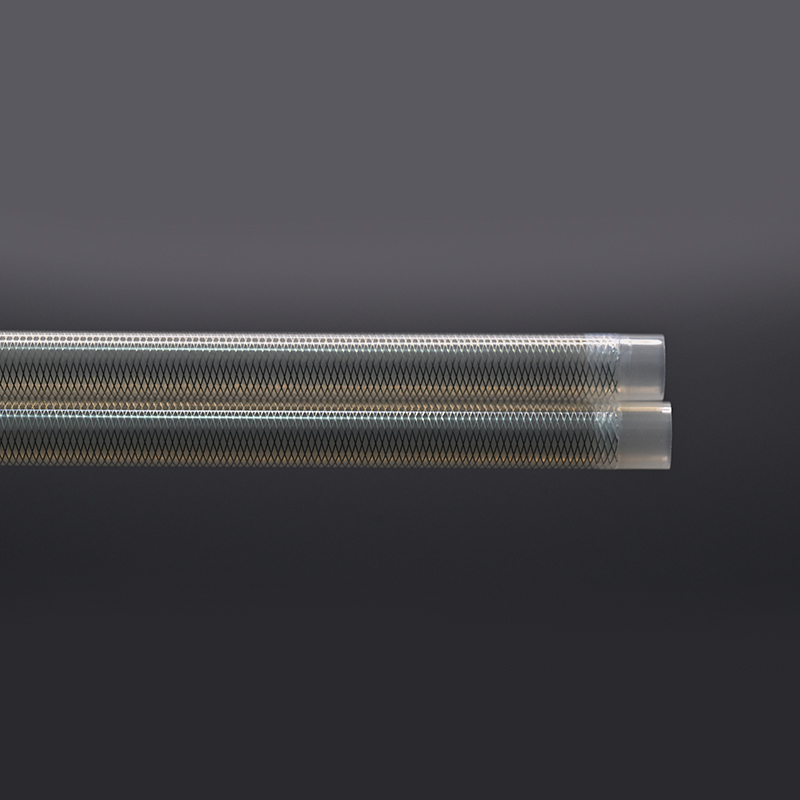 Braid-Reinforced Tubing for Catheter ShaftsEmbedded metal or fiber braid between layers supports burst pressure, column strength and torque transmission, making it relevant for reinforced catheter shafts and steerable sheath builds.View Product →
 Steerable Sheath for Adjustable Distal DeflectionPairs braided shaft reinforcement with an adjustable distal tip, rounded tip and PTFE liner; suitable for electrophysiology, vascular and urological access where precise deflection matters.View Product →
For steerable sheaths and deflectable catheters, the reinforced shaft and the deflectable tip should be developed together. A supplier that can tune braid, coil and reflow in the same process window is better placed to keep deflection force consistent from lot to lot.
Tip Bonding, Reflow and Handle Integration: Where Lost Motion Appears
The distal tip is the most inspected part of a steerable catheter and often the least forgiving. Reflow can thin the jacket at a bond land; adhesive can wick into a lumen; a pull ring can migrate under cyclic load. Each issue may pass a visual check yet change the force-travel curve. The CDMO should control thermal profiles, mandrel support, adhesive cure and bond-line inspection as validated processes.
Handle integration introduces another set of variables: pull-wire pretension, routing radius, lubrication, travel stops and strain relief. A handle that feels smooth on the bench can develop backlash after sterilization or shipping if the wire path is not constrained. The manufacturing team should therefore test the complete assembly, not just the shaft. Deflection angle versus handle travel, hysteresis, tip bond peel strength, leak, burst and particulate cleanliness belong in the same release plan.
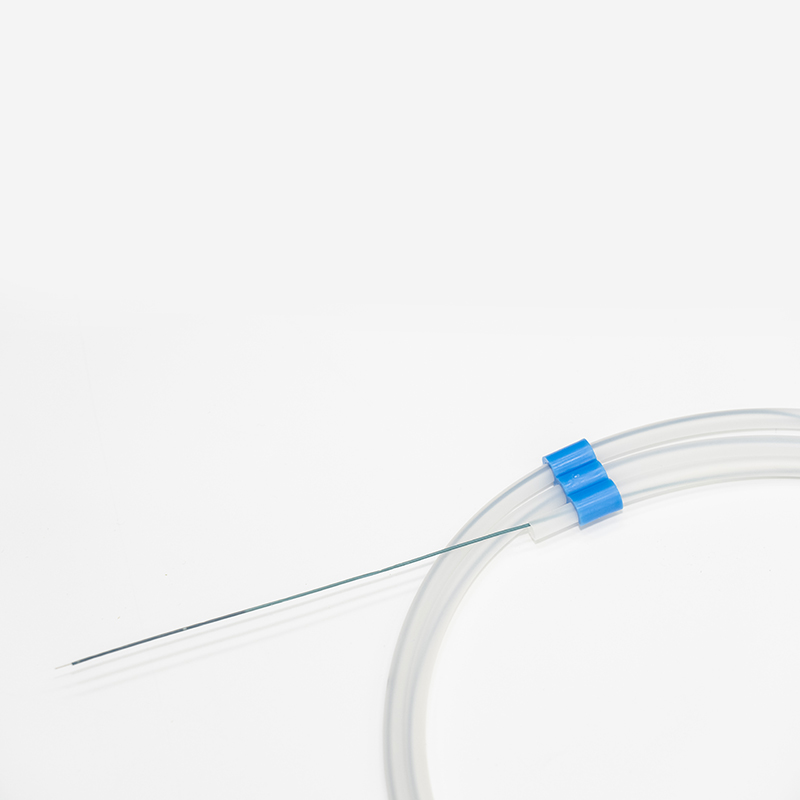 Micro Catheter for Small-Vessel and Neurovascular AccessSmall reinforced catheter with customizable hardness and diameter transitions and a rounded tip; relevant for neurovascular and coronary platforms where distal feel and precision matter.View Product →
For microcatheter-based platforms, the tolerance stack becomes even less forgiving. Small changes in liner friction or tip bond thickness can dominate the feel at the distal end. That is why a CDMO with in-house microcatheter experience is useful during design review, not only at serial production.
Quality Controls Specific to Steerable Devices
A general ISO 13485:2016 certificate is necessary but not sufficient. The audit trail should connect the design inputs to the process controls and the release tests. For steerable catheters, that means measuring the attributes that influence control: deflection range, force-travel hysteresis, torque response, kink radius, tip bond strength, leak and particulate cleanliness.
Useful evidence includes:
- Gauge R&R for deflection fixtures, not just calibration certificates.
- IQ/OQ/PQ for reflow, bonding, coating and handle assembly.
- Lot traceability from polymer lot to finished subassembly.
- Change control that triggers revalidation when a liner, braid or adhesive changes.
- Deviation and CAPA records that show how drift was contained.
Do not accept a final inspection that only checks appearance and a single deflection angle. A steerable catheter can pass that test and still have poor tactile feedback. The release method should capture the force path, because that is what the physician feels.
Scaling From Clinical Builds to Commercial Volume
Scale-up exposes hidden dependence on operators, fixtures and informal adjustments. A process that relies on one technician's feel for adhesive cure or braid tension is not ready for commercial volume. The CDMO should freeze the process window, qualify fixtures, set SPC limits and define how deviations are handled before the first commercial lot.
Capacity claims are only useful when they connect to the product. LINSTANT reports a GMP cleanroom of nearly 20,000 square metres, 15 imported extrusion lines, 8 PEEK extrusion lines, 2 injection molding lines, nearly 100 braiding, spring and coating machines, and 40 welding and forming sets. The chart below summarizes those reported equipment resources.
The practical question is how those assets are qualified for a specific steerable catheter. Ask for the process capability study, the fixture list, the sterilization compatibility plan and the contingency plan for a single-point failure. That is a better predictor of launch performance than a headline capacity number.
Where LINSTANT Fits in a Steerable Catheter Program
Ningbo LINSTANT Polymer Materials Co., Ltd. was established in 2014 and has since grown into a national-level high-tech enterprise with over 500 professional staff members. The company is committed to transcending the role of a traditional component supplier, striving to become an integral part of its customers' products. From precise matching during the collaborative design phase to reliability assurance during manufacturing, LINSTANT deeply integrates into the core value chain of its customers' products, transforming catheter technology into a core competitive advantage for their products.
Through continuous technological innovation and stringent quality control, we are capable of providing medical device companies with safer, more precise, and more technologically advanced customised catheter system solutions.
That positioning is relevant for steerable catheter manufacturing because the work sits between component supply and finished-device assembly. LINSTANT's OEM/ODM model covers extrusion, reinforcement, secondary processing and catheter subassembly, with ISO 13485:2016 and GMP cleanroom controls. Teams that need a CDMO to participate in design transfer can review the OEM/ODM catheter development page before the first technical review.
FAQ: Steerable Catheter Manufacturing and CDMO Selection
Q1. What does a steerable catheter manufacturing CDMO do?
It manages design transfer, extrusion, reinforcement, tip bonding, handle integration, validation and serial production under one quality system, rather than only supplying tubing.
Q2. How is a steerable catheter different from a guiding catheter?
A guiding catheter provides a stable conduit; a steerable catheter adds a pull-wire or deflectable tip so the clinician can actively shape the distal end. Some platforms combine both functions.
Q3. Which materials are used in deflectable catheter shafts?
Common choices include polyimide or PTFE liners, stainless-steel braid or coil reinforcement, and PEEK, PEBA, TPU or fluoropolymer jackets. Selection depends on stiffness, lubricity, bondability and sterilization.
Q4. How do you validate tip deflection and pull-wire fatigue?
Build fixtures that measure deflection angle versus handle travel, hysteresis and cyclic pull-wire load. Tie the method to design inputs, with gauge R&R and process validation under ISO 13485.
Q5. Can a CDMO support low-volume clinical builds and scale-up?
Yes, if the same process window is used from pilot to commercial lots. Ask how fixtures, operators, SPC and change control are managed between phases.
Q6. What should I ask before transferring a steerable catheter design?
Ask for the process map, critical-to-quality attributes, bond and reflow validation, test-method ownership, traceability and the change-control plan for liners, braid and adhesives.
If you are comparing a steerable catheter manufacturing CDMO for a deflectable sheath, microcatheter or guiding platform, start with the process map rather than the brochure. LINSTANT's engineering team can review the shaft construction, reinforcement, tip bonding and inspection plan against your design inputs.


