


 English
 Français
 Español
 简体中文
 简体中文
A 7.5 Fr intra-aortic balloon catheter inflates and deflates once per heartbeat — roughly 100,000 cycles a day inside a patient's descending aorta. A coronary dilatation balloon has to hold 18 atm without growing past its labelled diameter. Both are called balloon catheters, and only one of them belongs in polyurethane.
For compliant, low-pressure balloons, thermoplastic polyurethane is usually the right starting point: it elongates far, folds flat into a small profile, and survives repeated inflation without pinholes. For high-pressure, fixed-diameter work, it is usually the wrong one — and you find out at the burst test rather than in the cath lab. What sits between those two outcomes is specification: polyol chemistry, hardness, layer stack and process window.
Content
- 1 Where Polyurethane Balloons Fit — and Where They Do Not
- 2 Four Resin Decisions That Change the Finished Balloon
- 3 Single, Double or Triple Layer: What the Wall Actually Does
- 4 From Extrusion to a Folded Balloon: The Process Windows
- 5 Verification: What to Test, and What the Standard Says
- 6 Six Questions Worth Asking Before Tooling Is Cut
- 7 About Ningbo LINSTANT Polymer Materials Co., Ltd.
- 8 Frequently Asked Questions
Where Polyurethane Balloons Fit — and Where They Do Not
The useful property of polyurethane is not strength. It is controlled compliance. A 90A TPU balloon grows meaningfully as pressure rises, which is exactly the behaviour you want when the device has to appose a variable-diameter lumen or form a soft, large-volume seal.
- Intra-aortic balloon pumps: the balloon must inflate and deflate in milliseconds with helium, follow the aorta's curvature, and stay intact through hundreds of thousands of cycles.
- Airway and cuff devices: thin-walled, high-volume, low-pressure cuffs that seal against the tracheal wall without exceeding its perfusion pressure.
- Tamponade and occlusion: oesophageal, gastric, postpartum and large-vessel balloons where volume, not force, does the work.
- Soft sizing and low-pressure dilatation: peripheral sizing balloons and vessel occlusion devices used where a fixed diameter would be unsafe.
Where it stops being a good idea: coronary dilatation, stent post-dilatation, and any design where the labelled diameter must hold within a few percent across the full pressure range. That is PET and polyamide block copolymer territory. A polyurethane balloon forced into that role will either fail burst testing or need such a heavy wall that it no longer tracks or refolds.
An early patent filing on the subject, WO2000051660A1, deliberately narrowed the balloon to "a specific, small group of polyurethane materials" rather than polyurethane at large. That framing still holds. The family name tells you very little; the polyol and isocyanate behind it tell you almost everything.
Four Resin Decisions That Change the Finished Balloon
Polyol chemistry comes first
Polyester polyol grades give the highest tensile and tear strength and the worst hydrolysis resistance; they are a poor match for a three-year shelf life, moist-heat sterilisation or repeated condensation during shipping. Polyether polyols resist hydrolysis but are weaker and sensitive to oxidation. Polycarbonate polyols sit in the middle and are usually the compromise selected for long-dwell implants and reusable-adjacent components.
Aromatic versus aliphatic isocyanate
MDI-based aromatic TPU is stronger and cheaper, and it yellows. Aliphatic grades based on H12MDI or HDI hold colour and tolerate gamma irradiation better, at lower modulus. Cuffs and any balloon subject to visual inspection or light-cured assembly are usually specified aliphatic for that reason alone.
Hardness sets the compliance curve
Medical balloon grades run from roughly Shore 80A to 55D. Hardness is the primary lever on how much diameter grows per atmosphere; wall thickness is the second. Fixing hardness late in a project is expensive, because it changes the forming window, the fold pattern and the bond parameters at the same time.
Additives and radiopacity
Barium sulfate or tungsten loading makes a balloon visible under fluoroscopy but costs elongation, and heavily loaded compounds can turn brittle at balloon wall thickness. Marker bands on the shaft are often the better answer. Either way, the compound needs a biological evaluation under ISO 10993-1 before it goes near a patient-contact drawing.
| Balloon class | Typical materials | Diameter versus pressure | Typical devices |
|---|---|---|---|
| Compliant | Polyurethane (ether or polycarbonate polyol), silicone | Grows continuously; final diameter set by pressure | IABP, airway cuffs, tamponade, occlusion |
| Semi-compliant | Polyamide block copolymer, blends | Moderate growth up to a rated pressure | Peripheral dilatation, predilatation, stent delivery |
| Non-compliant | PET, oriented nylon | Nearly fixed diameter up to high pressure | Coronary dilatation, post-dilatation |
The chart is a qualitative index of design trade-offs from general material behaviour, not a set of measured test values. It shows why a compliant balloon catheter and an angioplasty balloon rarely share a material: polyurethane and PET sit almost opposite each other on the same five axes.
Single, Double or Triple Layer: What the Wall Actually Does
Most polyurethane balloons are not a single extruded wall. The layer stack exists because no single TPU can be soft enough to refold, strong enough to bond to the shaft, and smooth enough to track at the same time.
The outer layer dictates how the balloon folds and how it releases from its wrap; a slightly harder skin refolds more predictably. The inner layer faces the inflation lumen and carries the shaft bond. Tie layers exist only because the two functional layers rarely bond to each other — in a three-layer balloon tubing, that middle layer is doing chemical work, not mechanical work.
Layer count also drives cost and lead time: a tri-layer coextrusion multiplies the tolerance stack, so the inner diameter and wall concentricity of the finished tubing matter more than the nominal gauge. That is the specification worth arguing over before tooling is released.
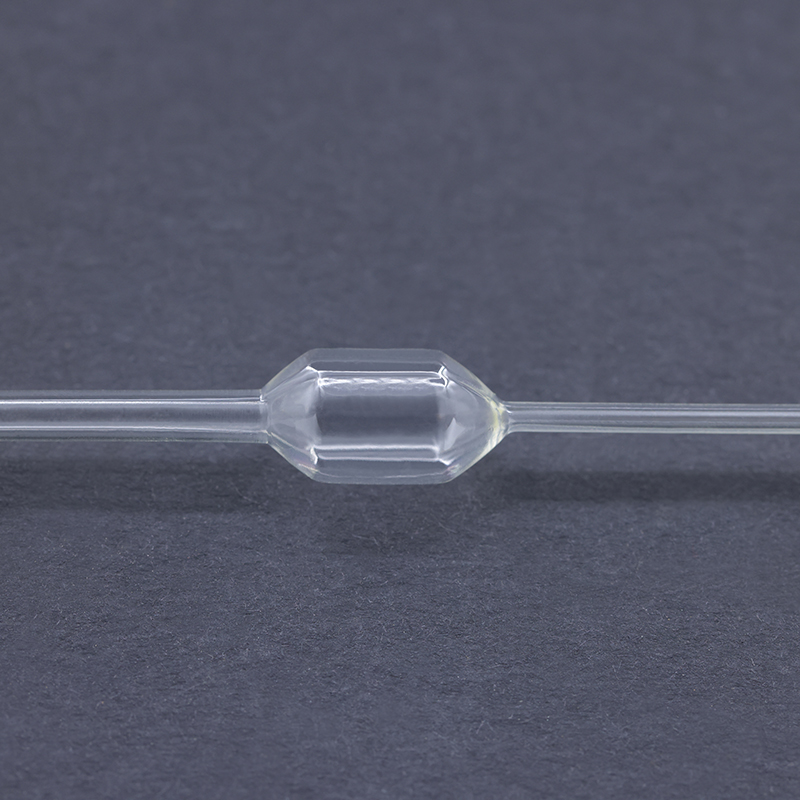 Medical Balloon Tubing for Dilatation Catheter BodiesSingle-, double-, and triple-layer balloon tubing with tight tolerances, material options, and burst-pressure customization for review before tooling is released.View Product →
From Extrusion to a Folded Balloon: The Process Windows
Polyurethane is far less forgiving than nylon in the extruder and in the balloon former, mostly for one reason: it absorbs moisture. Resin that has been open to plant air for a shift will hydrolyse in the barrel, and the result is micro-bubbles that only appear once the balloon is blown and pressurised.
- Drying to a verified dew point before every run, with hopper residence time controlled.
- Wall concentricity measured on the balloon body length, not averaged over the whole tube.
- Free-blowing or mould blowing at a temperature window narrow enough that draw-down does not thin one side of the wall.
- Thermal or laser bonding to the shaft, then folding and wrap setting, which fixes the insertion profile.
Because these steps interact, engineers usually benefit from buying tubing and forming support from one source rather than assembling a chain of single-process vendors. A useful overview of how balloon tubing is applied across device types helps frame the tolerances before quoting.
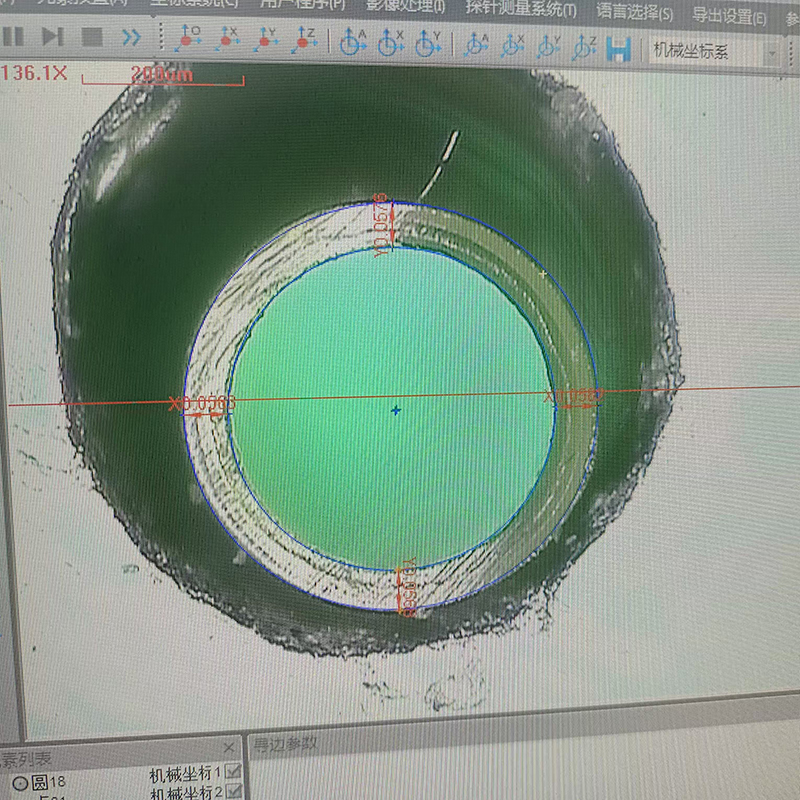 Medical Multi-layer Tubing for Catheters and Delivery SystemsDouble- and triple-layer tubing with bonded layers, tight tolerances, and selectable materials for catheter, infusion, and drainage designs requiring dimensional control.View Product →
Verification: What to Test, and What the Standard Says
For balloon dilatation catheters, ISO 10555-4 is the reference most regulators expect; it drives the declaration of rated burst pressure rather than a single factory figure. For cuffs, tamponade devices and pumps, the applicable device-specific standard applies instead, but the tests below are the same set in almost every submission.
- Burst pressure, with the mean minus a statistical margin as the labelled value.
- Compliance curve: diameter against pressure across the full working range, not just at rated pressure.
- Cyclic fatigue — inflation and deflation to a defined count, then leak and burst.
- Bond strength at the balloon-to-shaft junction, wet and dry.
- Particulate and coating integrity, plus a re-test after the validated sterilisation cycle.
One polyurethane-specific addition: measure creep as well as burst. A compliant balloon held at pressure for hours relaxes and grows, so a short-duration test can pass a design that drifts outside its clinical diameter on the ward.
Six Questions Worth Asking Before Tooling Is Cut
- Which polyol and isocyanate family is this grade, and is the hydrolysis claim documented rather than assumed?
- What are the wall thickness and concentricity tolerances over the balloon body length?
- Can single, double and triple layer tubing be supplied from a controlled resin lot?
- How is the resin dried and handled between drying and the extruder?
- Which sterilisation cycles has the grade actually been validated for?
- What is the change-control route if a resin supplier changes a formulation?
About Ningbo LINSTANT Polymer Materials Co., Ltd.
Ningbo LINSTANT Polymer Materials Co., Ltd. was established in 2014 and has since grown into a national-level high-tech enterprise with over 500 professional staff members. The company is committed to transcending the role of a traditional component supplier, striving to become an integral part of its customers' products. From precise matching during the collaborative design phase to reliability assurance during manufacturing, LINSTANT deeply integrates into the core value chain of its customers' products, transforming catheter technology into a core competitive advantage for their products.
Through continuous technological innovation and stringent quality control, we are capable of providing medical device companies with safer, more precise, and more technologically advanced customised catheter system solutions. The company operates from a near 20,000 square metre GMP-compliant cleanroom facility in Ningbo, with imported extrusion lines offering single, double and triple coextrusion, PEEK extrusion lines, braiding, coiling and coating equipment, and welding and forming capacity — supported by ISO 13485:2016 certification and a dedicated OEM/ODM service for customers who need design and manufacturing under one roof.
Frequently Asked Questions
Q1. What is a polyurethane balloon catheter used for?
Mainly compliant, low-pressure work: intra-aortic balloon pumps, airway and tracheostomy cuffs, tamponade balloons and soft vessel occlusion devices. It is not the usual choice for high-pressure angioplasty.
Q2. Is polyurethane a compliant or non-compliant balloon material?
Compliant to semi-compliant, depending on hardness and wall. Shore 80A grades grow a great deal with pressure; 55D grades grow less but still far more than PET.
Q3. What pressure can a polyurethane balloon hold?
It is design-specific. Low-pressure devices run in the single-digit psi to low-atmosphere range, and the rated burst pressure must be established by testing, never taken from a resin datasheet.
Q4. Why do polyurethane balloons degrade over shelf life?
Hydrolysis, mostly. Polyester polyol grades absorb moisture and lose tensile strength; polyether and polycarbonate polyol grades resist it better, and packaging plus drying control the rest.
Q5. What is the difference between single-layer and triple-layer balloon tubing?
A single wall must balance softness, bonding and surface finish at once. Triple-layer tubing separates those jobs into an outer, tie and inner layer, at the cost of a longer tolerance stack.
Q6. Can polyurethane balloons be gamma sterilised?
Yes, with the right grade. Aliphatic TPU tolerates gamma far better than aromatic grades, which tend to yellow and can suffer chain scission; EtO is the common alternative for moisture-sensitive compounds.


