


 English
 Français
 Español
 简体中文
 简体中文
A balloon that passes a bench burst test can still fail in the cath lab, and the root cause is almost always upstream of the assembly bench: an extruded tube with an eccentric wall, or a neck bond that looked closed under a microscope but never fully fused. That is the uncomfortable reality of balloon catheter manufacturing. The visible steps get the attention; the extruded tube gets the blame.
So the conclusion first: quality in balloon catheter manufacturing is decided at two points, the tubing extrusion and the balloon-to-shaft joint. Control those two and folding, coating, packaging and sterilisation become predictable. Lose control of either and no amount of final inspection recovers the yield.
Content
- 1 The Anatomy of a Balloon Catheter Build
- 2 Where Balloon Catheter Manufacturing Actually Breaks Down
- 3 Balloon Tubing: The Specification Is the Product
- 4 The Shaft Sets the Ceiling on Performance
- 5 Balloon Forming: Heat, Stretch and the Compliance Curve
- 6 Bonding the Balloon to the Shaft
- 7 What to Audit Before You Sign
- 8 About LINSTANT
- 9 Frequently Asked Questions
- 9.1 What is balloon catheter manufacturing?
- 9.2 What materials are used in balloon catheter manufacturing?
- 9.3 What is the difference between compliant and non-compliant balloons?
- 9.4 What is rated burst pressure of a balloon catheter?
- 9.5 How is a balloon bonded to a catheter shaft?
- 9.6 What certification should a balloon catheter manufacturer hold?
The Anatomy of a Balloon Catheter Build
Before blaming a process, it helps to name the interfaces that carry the tolerance chain: the guidewire lumen must accept a 0.014 in wire for coronary work (0.035 in for peripheral devices), the radiopaque marker bands must be crimped without cracking the inner tube, and the balloon cone must match the shaft diameter closely enough for the neck bond to be continuous around the circumference.
Where Balloon Catheter Manufacturing Actually Breaks Down
Four failure modes account for most of the scrap and rework in a balloon programme, and none of them appear at final inspection until it is too late:
- Eccentric wall in the balloon tubing. The thin side reaches burst first, so the compliance curve shifts from lot to lot even when the nominal wall dimension is on spec.
- Incomplete neck fusion. A bond that seals at 4 atm and weeps at rated burst pressure will pass a low-pressure leak test every time.
- Marker band crimp that is too tight. It cracks the inner liner, producing a slow leak that only shows up after repeated inflation cycles.
- Moisture in nylon resin. Polyamides absorb water, and wet resin produces voids and unpredictable forming behaviour during blow moulding.
The interaction between balloon compliance and shaft stiffness is covered in more detail in this look at balloon dilatation catheter design and performance, which is a useful starting point before locking a tube specification.
Balloon Tubing: The Specification Is the Product
Balloon tubing is normally extruded from nylon 12, Pebax, PET or polyurethane, and the layer structure is a design decision rather than a quality ranking. Single-layer tubing is the simplest route, two-layer coextrusion separates compliance from bondability, and three-layer structures split the job three ways: an inner layer tuned for bonding, a core that carries strength, and an outer skin that controls trackability and coating adhesion.
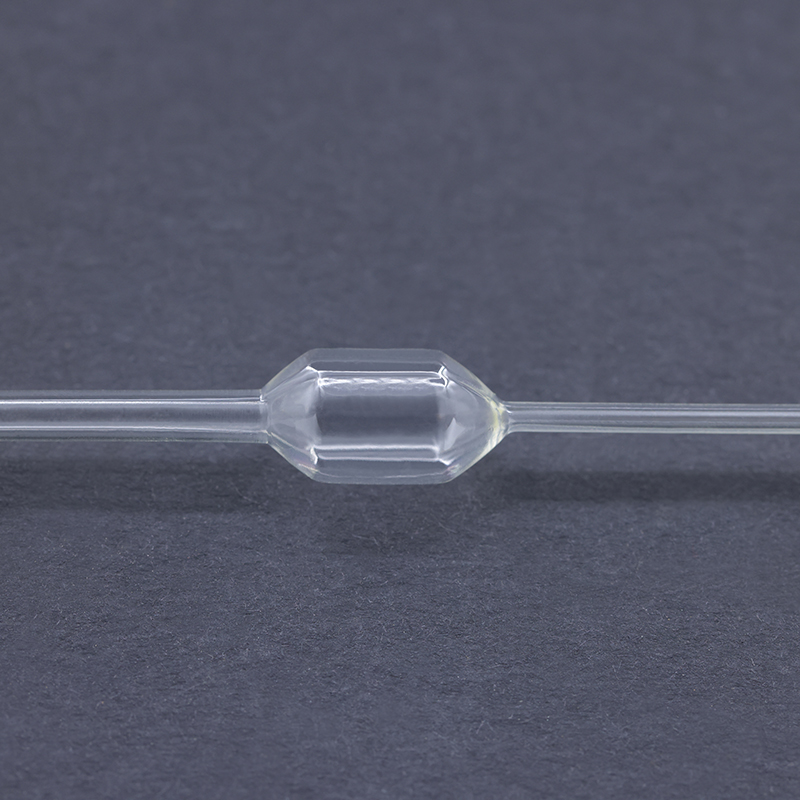 Custom Balloon Tubing for Dilatation Catheter BodiesReview extrusion options with tight tolerances, single to triple layers, and concentricity data relevant to burst-pressure scatter in balloon bodies.View Product →
| Construction | Typical materials | What it solves | Watch-out |
|---|---|---|---|
| Single layer | Nylon 12, Pebax | Straightforward compliance control, lower cost | Neck strength depends entirely on the base resin |
| Two layer | Nylon 12 with Pebax or PU | Balances compliance against bondability | Interface quality collapses if coextrusion temperatures drift |
| Three layer | Bond layer, structural core, outer skin | Strength, compliance and bonding handled separately | More die variables; concentricity needs tight process control |
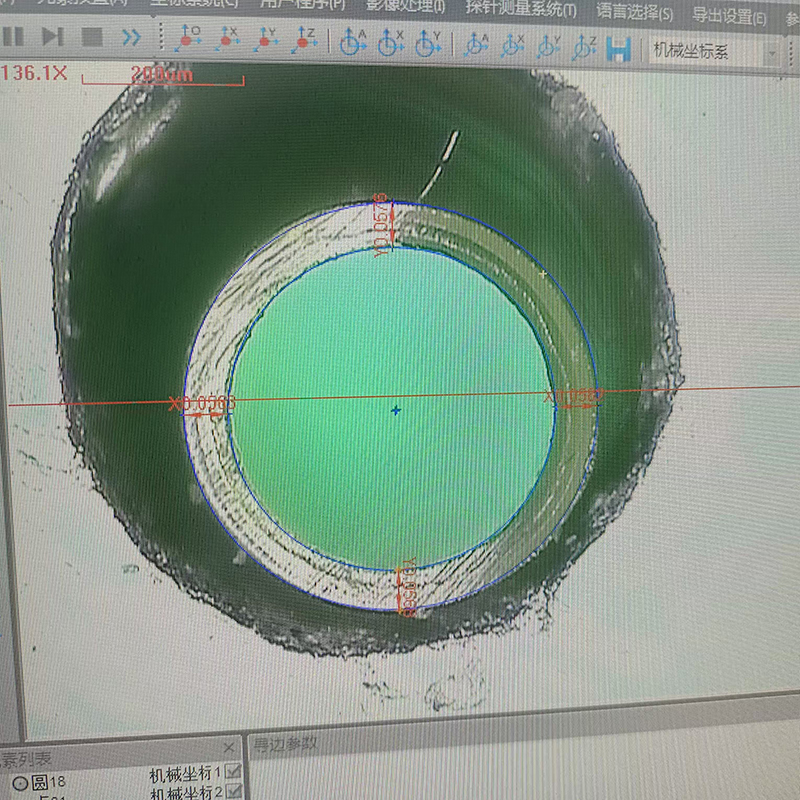
Concentricity tolerances usually matter more than nominal dimensions. A tube produced at 0.0015 in eccentricity will form a balloon with a wall that varies around the circumference, and that variation shows up directly as scatter in burst pressure. Ask for the concentricity figure, not just the OD and ID.
The Shaft Sets the Ceiling on Performance
A balloon can only be as good as the shaft it sits on. Pushability, kink resistance and torque transfer come from the shaft construction, which is typically a Pebax or nylon outer jacket over a stainless steel or nitinol braid, with a PTFE liner to keep the guidewire moving freely. Multilayer extrusions let one tube carry a soft distal section, a stiff proximal section and a lubricious lumen without a separate assembly step.
 Medical Multi-layer Tubing for Catheter ShaftsReview multi-layer extrusions for catheter shafts, with inner and outer material combinations, tight tolerances, and durable flexible tubing for medical devices.View Product →
For peripheral and high-pressure applications, braid angle and wire count decide how much pressure the shaft carries before it ovalises. That specification should be agreed before the balloon compliance curve is fixed, because the two are tested together in a trackability and inflation fixture.
Balloon Forming: Heat, Stretch and the Compliance Curve
Forming is a stretch blow moulding process. The tube is preconditioned, brought into the forming window of its polymer, stretched axially and expanded radially with nitrogen inside a mould cavity, then cooled under pressure and annealed to relieve residual stress. Free-blowing without a mould gives a rounder balloon with a less defined working diameter; mould forming gives repeatable dimensions, which is why most coronary and peripheral balloons are mould-formed.
The output of forming is the compliance curve, the relationship between inflation pressure and balloon diameter. Semi-compliant nylon and Pebax balloons grow with pressure and feel softer at the lesion; non-compliant PET balloons hold their diameter and suit high-pressure dilatation. Rated burst pressure is derived statistically from a tested sample rather than from a single balloon, and ISO 10555-4 sets the requirements for balloon dilatation catheters used in intravascular work.
Bonding the Balloon to the Shaft
The neck bond is where most field complaints originate, and the method is dictated by the material pair and the diameter, not by what the line already owns.
| Method | How it works | Best suited to | Risk |
|---|---|---|---|
| Thermal reflow under heat shrink | A shrink tube compresses the neck while heat fuses the polymer | Pebax and nylon necks in volume production | Recovery force and cooling rate must be validated for each size |
| Laser bonding | Localised, controllable heat dose at the joint line | Small diameters and short necks | Power drift can char or leave an unfused band |
| UV-cure adhesive | Low-temperature cure with light exposure | Dissimilar materials, PET assemblies | Cure shadowing in opaque constructions; shrinkage stress |
| Cyanoacrylate | Room-temperature, fast setting | Prototypes and short runs | Brittle joint with limited fatigue life |
 FEP Heat Shrink Tubing for Catheter BondsReview FEP heat-shrink tubing for composite catheter shafts and neck bonds, with lubricity, insulation, and chemical resistance for bonding processes.View Product →
Whichever route is chosen, the qualification is the same: tensile pull on the neck, leak testing before and after repeated inflation cycles, and a cross-section to confirm the bond is continuous through 360 degrees. A partial bond is the most expensive defect in the process, because it passes every low-pressure test and fails only in the clinical setting.
What to Audit Before You Sign
Supplier audits in this sector tend to converge on the same six questions. Ask them in this order:
- Is the ISO 13485:2016 certificate scoped to polymer extrusion and catheter assembly, not just to trading?
- What cleanroom class covers balloon forming and neck bonding, and how is particulate monitored?
- Is there documented IQ/OQ/PQ for every forming and bonding station, or only for the extruders?
- Can resin lots be traced forward to finished device lots, and backward from a complaint?
- Is concentricity measured in-line or sampled at end of run?
- How are burst pressure, fatigue cycling and bond strength sampled statistically, and who signs lot release?
Answers that describe a process rather than a certificate are usually the reliable ones.
About LINSTANT
Ningbo LINSTANT Polymer Materials Co., Ltd. was established in 2014 and has since grown into a national-level high-tech enterprise with over 500 professional staff members. The company is committed to transcending the role of a traditional component supplier, striving to become an integral part of its customers' products. From precise matching during the collaborative design phase to reliability assurance during manufacturing, LINSTANT deeply integrates into the core value chain of its customers' products, transforming catheter technology into a core competitive advantage for their products.
Through continuous technological innovation and stringent quality control, we are capable of providing medical device companies with safer, more precise, and more technologically advanced customised catheter system solutions.
For programmes that need tube design, balloon forming and secondary processing under one quality system, our OEM/ODM catheter development service covers the route from specification to serial production.
Frequently Asked Questions
What is balloon catheter manufacturing?
It is the sequence that turns extruded polymer tubing into a finished dilatation device: balloon tubing extrusion, stretch blow moulding of the balloon, shaft assembly with marker bands, neck bonding, folding, coating and sterilisation under an ISO 13485 quality system.
What materials are used in balloon catheter manufacturing?
Nylon 12 and Pebax dominate semi-compliant balloons, PET is chosen where high pressure and low compliance are required, and polyurethane appears in specialised designs. Shafts combine Pebax or nylon with a PTFE liner and stainless steel or nitinol braid.
What is the difference between compliant and non-compliant balloons?
Semi-compliant balloons grow as pressure rises and feel softer at the lesion; non-compliant balloons such as PET hold their diameter across the working range. The choice fixes the compliance curve, the rated burst pressure and the handling feel.
What is rated burst pressure of a balloon catheter?
Rated burst pressure is the pressure a balloon is statistically expected to survive, derived from burst testing across a sample rather than from one balloon. ISO 10555-4 sets out the requirements for balloon dilatation catheters.
How is a balloon bonded to a catheter shaft?
Most commonly by thermal reflow under a heat shrink tube, by laser bonding, or with UV-cure adhesive. The bond must be continuous around the full circumference, because a partial bond passes a low-pressure leak test and fails at rated burst.
What certification should a balloon catheter manufacturer hold?
At minimum ISO 13485:2016 scoped to extrusion and catheter assembly, controlled cleanroom conditions for forming and bonding, and validated sterilisation. Lot traceability from resin to finished device is what regulators examine first.


