


 English
  Français
  Español
  简体中文
简体中文
 简体中文
简体中文
When a medical device is placed in the body, the first question is not "does it work?" but "is it safe?" Polyetheretherketone (PEEK) has answered that question for decades. Its biocompatibility is not a marketing phrase; it comes from a chemically stable backbone that does not release harmful leachables, does not degrade in bodily fluids, and does not provoke chronic inflammation. For catheters, delivery systems, and implantable components, PEEK has become a default choice when engineers need both structural reliability and tissue tolerance.
Content
- 1 PEEK Biocompatibility: What the Term Really Means
- 2 Why PEEK Performs Well in Living Tissue
- 3 Medical-Grade PEEK: Grades and Standards
- 4 Bioinert vs Bioactive: When Surface Modification Is Needed
- 5 How PEEK Biocompatibility Is Maintained During Processing
- 6 PEEK in Medical Tubing and Catheters
- 7 How to Choose a PEEK Tubing Supplier
- 8 Company Introduction
- 9 Frequently Asked Questions about PEEK Biocompatibility
PEEK Biocompatibility: What the Term Really Means
Biocompatibility is not a single material property. It describes the ability of a material to perform with an appropriate host response in a specific application. For PEEK, that response has been repeatedly documented in ISO 10993 tests and clinical use.
PEEK's aromatic backbone contains ether and ketone groups arranged in a repeating unit. This structure makes the polymer highly resistant to hydrolysis, acids, bases, and organic solvents. It does not contain plasticisers or leachable additives that could migrate into tissue. The material is also inherently free of bisphenol A (BPA) and other endocrine disruptors, which are a concern with some other polymers. According to published reviews in the Journal of Biomedical Materials Research, PEEK test articles show low cell toxicity, no significant sensitisation activity, and a minimal inflammatory response when implanted in animal models.
For engineers, this means PEEK passes the standard battery of ISO 10993 biocompatibility tests required for short-term contact and long-term implantable devices, provided the material is compounded and processed under medical-grade conditions.
Why PEEK Performs Well in Living Tissue
One reason PEEK is so well tolerated is that its surface does not create a harsh local environment. It is chemically inert, does not corrode, and does not release metal ions. For implants placed near bone, its elastic modulus closely resembles cancellous bone, reducing stress shielding and encouraging natural loading. For catheter applications, its low friction coefficient helps prevent tissue damage during navigation.
PEEK can withstand repeated autoclave and gamma sterilisation without degradation, while many other polymers soften, embrittle, or decompose. This thermal headroom makes PEEK suitable for devices that need to survive aggressive sterilisation cycles without losing mechanical integrity.
This closer match with bone tissue helps orthopaedic implants integrate without stress shielding. In vascular devices, the moderate stiffness of PEEK allows a guide wire or catheter shaft to maintain pushability while still bending through tortuous anatomy.
Medical-Grade PEEK: Grades and Standards
Not all PEEK is equal. Medical-grade PEEK is manufactured under controlled compounding and validated processes, and it must meet specifications such as ASTM F2026 for PEEK. These standards define acceptable limits for extractables, injectables, and mechanical properties. Industrial PEEK can contain additives or fillers that are not suitable for in-vivo contact.
When a PEEK component is used in a medical device, the supplier should provide evidence of batch traceability and biocompatibility testing on the final formulation. A responsible manufacturer will run the material through cell toxicity, sensitisation, and implantation studies according to ISO 10993, and document those results. PEEK is also known for its outstanding radiation stability: it retains its properties after gamma and electron-beam sterilisation, which is a key advantage over materials that degrade or discolour.
For engineers, the takeaway is straightforward: choose a PEEK grade and a supplier that comply with the relevant medical device regulations. The biocompatibility of the raw material does not automatically transfer to the finished component if the manufacturing process introduces contamination or changes the surface chemistry.
Bioinert vs Bioactive: When Surface Modification Is Needed
PEEK is a bioinert material, which means it does not actively bond with bone tissue. That is not a flaw for catheter and soft-tissue applications, where a low response is exactly what you want. In orthopaedic and dental implants, however, engineers sometimes add surface treatments such as hydroxyapatite coatings, plasma spraying, or chemical etching to improve bone integration.
Surface modification does not change the bulk biocompatibility of PEEK; it adds a controlled surface layer that encourages cell attachment. Many of these treatments are applied to the finished component, so the underlying PEEK still meets ISO 10993 requirements. For medical tubing, the practical concern is more often about maintaining a clean, smooth surface after extrusion and secondary processing, which we cover next.
How PEEK Biocompatibility Is Maintained During Processing
Even a flawless PEEK resin can lose its biocompatibility if the machining or extrusion process introduces contamination. Lubricants, metal shavings, release agents, or even airborne particles can become embedded in the part surface. That is why medical-grade PEEK components must be produced in a controlled cleanroom environment under GMP conditions.
A responsible manufacturer tracks every batch from raw material to finished product. They validate the extrusion temperature profile, inspect concentricity and wall thickness, and perform post-processing such as cleaning, deburring, and surface treatment in a clean environment. The production line should be dedicated to medical polymers, not shared with industrial materials that could cross-contaminate.
Our own facility includes nearly 20,000 square metres of cleanroom space and a suite of dedicated PEEK extrusion lines, injection moulding machines, and machining equipment. This level of control helps ensure that the biocompatibility documented on a material certificate is actually present in the device you receive.
PEEK in Medical Tubing and Catheters
Over the past decade, PEEK has earned a strong reputation in interventional cardiology, neurology, and minimally invasive surgery. PEEK tubing is used in guiding catheters, micro catheters, and balloon catheters because it offers a combination of stiffness and flexibility, low internal friction, and exceptional kink resistance. The material does not absorb water, so it maintains dimensional stability inside the body.
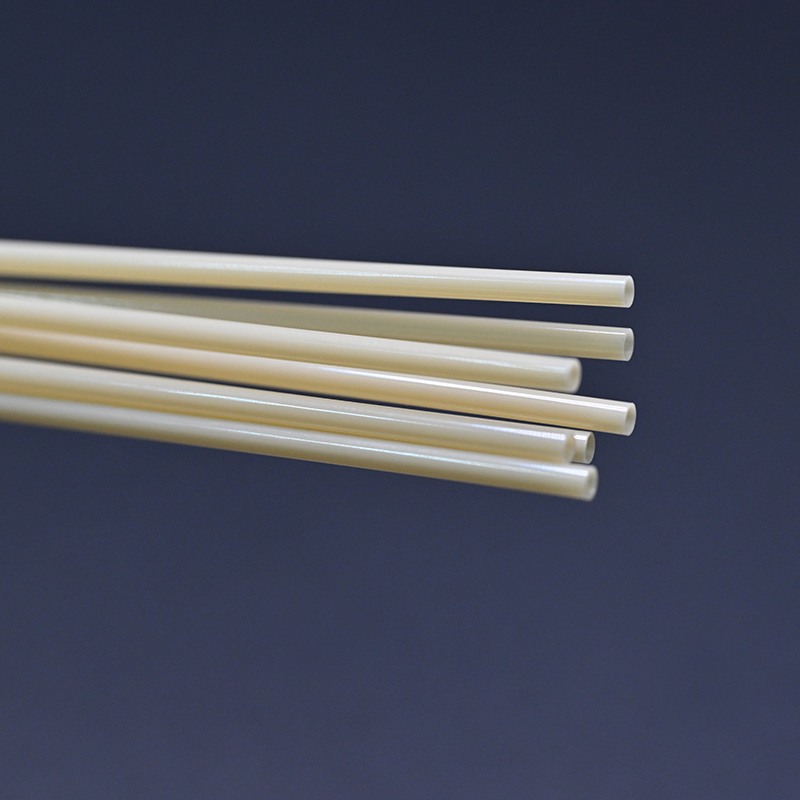 PEEK Tubing for Medical Catheters and Multilumen ApplicationsPEEK tubing offers high strength, kink resistance, and dimensional stability for use in guiding catheters, endoscopes, and urological devices. Its biocompatibility and ability to be produced in thin-walled, multi-lumen forms support smaller, more navigable instruments.View Product →
In many catheter designs, PEEK is paired with thin-wall extrusion to reduce profile while preserving mechanical performance. The ability to produce ultra-thin, multilayer PEEK tubes is a core competency at LINSTANT, and it opens the door to smaller, more navigable devices.
PEEK heat-shrink tubing has become a reliable way to attach components, insulate splices, and protect catheter junctions without adding bulk. It shrinks tightly around the underlying structure and remains stable after gamma sterilisation.
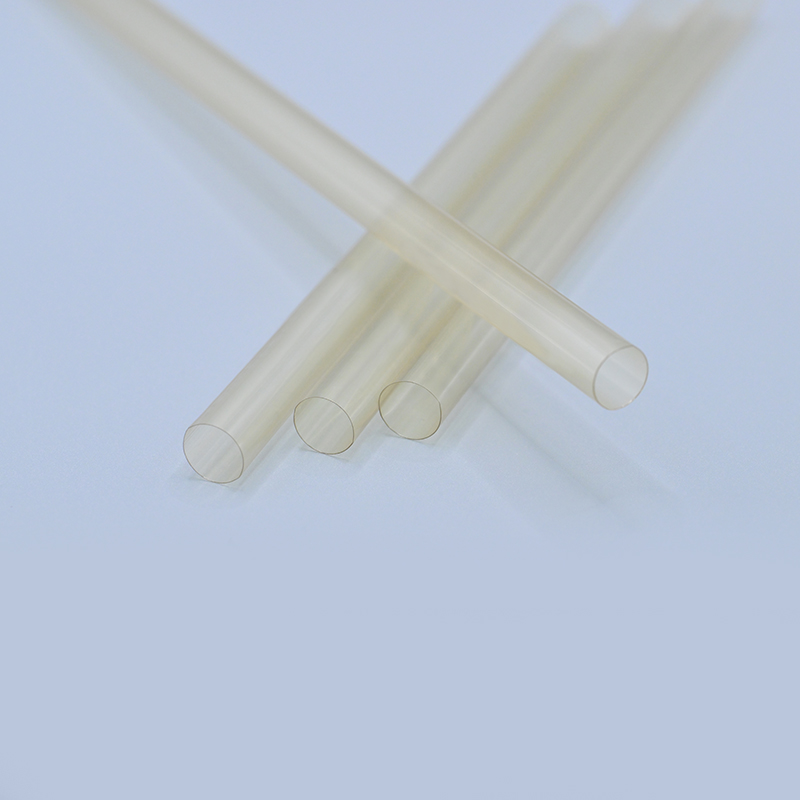 PEEK Heat Shrink Tubing for Component Insulation and ProtectionPEEK heat shrink tubing provides a tight, stable cover for joints and splices in medical devices, withstands temperatures up to 260°C, and resists radiation and corrosion. Its reliable insulation makes it suitable for critical connections.View Product →
For components with complex geometry, such as manifold bodies, jackets, or radiopaque markers, injection-moulded or machined PEEK parts can deliver tight tolerances and repeatability. Machined PEEK parts are also useful in small-batch or early-prototype programmes where tooling costs are not yet justified.
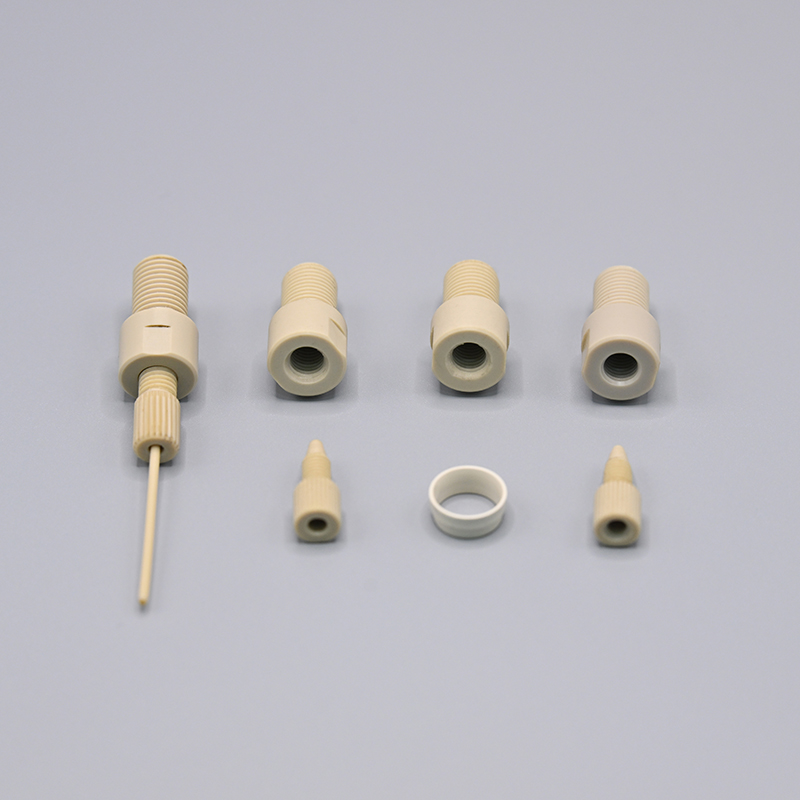 Machined PEEK Parts for Complex Medical Device ComponentsMachined PEEK parts deliver precise tolerances for manifolds, jackets, and radiopaque markers in medical devices. They are ideal for prototypes and small batches, offering strength and biocompatibility without tooling costs.View Product →
How to Choose a PEEK Tubing Supplier
Selecting a supplier is as important as selecting the material. A reliable PEEK tubing partner should operate a cleanroom environment, maintain GMP compliance, and demonstrate process control over extrusion and post-processing. Ask these questions before awarding a contract:
- Do you run dedicated PEEK extrusion lines with controlled temperature profiles?
- Can you produce ultra-thin wall or multilayer structures with tight concentricity?
- How do you document batch traceability and testing results?
- Can you provide ISO 10993 test reports for the finished component?
- Do you offer secondary operations such as flaring, tipping, and surface treatment?
If your supplier can answer these with documented evidence, the risk is low. At LINSTANT, we treat PEEK as a core material family and have built an OEM/ODM capability that supports customers from design research through to serial production.
Company Introduction
Ningbo LINSTANT Polymer Materials Co., Ltd. was established in 2014 and has since grown into a national-level high-tech enterprise with over 500 professional staff members. The company is committed to transcending the role of a traditional component supplier, striving to become an integral part of its customers' products. From precise matching during the collaborative design phase to reliability assurance during manufacturing, LINSTANT deeply integrates into the core value chain of its customers' products, transforming catheter technology into a core competitive advantage for their products.
Through continuous technological innovation and stringent quality control, we are capable of providing medical device companies with safer, more precise, and more technologically advanced customised catheter system solutions. Contact us to discuss your next PEEK catheter project.
Frequently Asked Questions about PEEK Biocompatibility
Is PEEK biocompatible?
Yes, medical-grade PEEK is widely considered biocompatible. It has passed ISO 10993 tests for cytotoxicity, sensitisation, and irritation.
Does PEEK pass ISO 10993?
PEEK raw materials and finished components can be validated to ISO 10993 requirements.
Can PEEK be used in blood contact?
Yes, PEEK is used in catheters and vascular devices. Its low friction and chemical inertness help minimise thrombosis risk.
Is PEEK radiolucent?
PEEK is radiolucent, which means it does not block X-rays. This can be an advantage when a device needs to be visible in imaging.
How is PEEK biocompatibility tested?
Standard testing includes cell culture, animal implantation, and chemical extract analysis according to ISO 10993.
What is medical grade PEEK?
Medical grade PEEK is produced under controlled compounding with batch traceability and validated mechanical properties per ASTM F2026.


