


 English
  Français
  Español
  简体中文
简体中文
 简体中文
简体中文
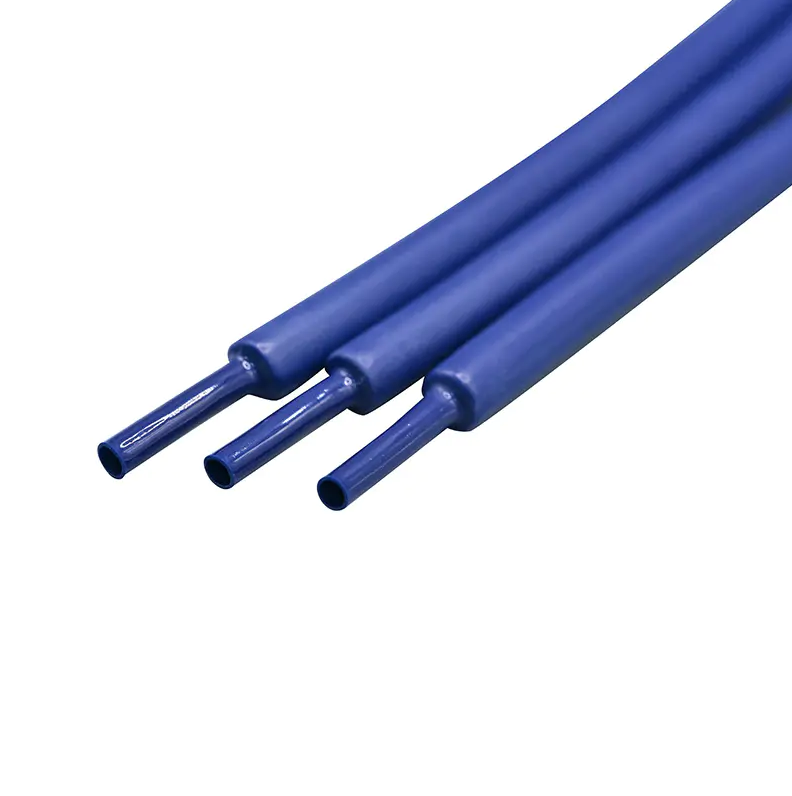
Heat shrink tubing is a thermoplastic tube that contracts when exposed to heat, forming a tight, protective sleeve around wires, components, or medical devices. It is used primarily for electrical insulation, mechanical protection, strain relief, bundling, and sealing — and in medical applications, it plays a critical role in catheter construction, device encapsulation, and precise dimensional control of tubing assemblies.
Content
- 1 Core Functions of Heat Shrink Tubing
- 2 Heat Shrink Tubing in Medical Device Manufacturing
- 3 Common Materials and Their Properties
- 4 Key Parameters to Specify When Selecting Heat Shrink Tubing
- 5 Industrial and Aerospace Applications
- 6 How LINSTANT Applies Heat Shrink Technology in Medical Polymer Tubing
- 7 Best Practices for Applying Heat Shrink Tubing in Medical Manufacturing
- 8 Frequently Asked Questions About Heat Shrink Tubing
Core Functions of Heat Shrink Tubing
Heat shrink tubing serves a broad range of functional roles across industries. Understanding these core applications helps engineers and designers choose the right material and wall thickness for their specific needs.
- Electrical insulation: Covers exposed conductors, solder joints, and terminals to prevent short circuits and protect against voltage up to several kilovolts depending on wall thickness.
- Mechanical protection: Shields cables and components from abrasion, chemicals, UV radiation, and moisture ingress.
- Strain relief: Reduces stress at cable entry points, extending the service life of connectors by distributing bending forces over a larger area.
- Bundling and organization: Groups multiple wires or tubes into a single, manageable assembly.
- Identification and color-coding: Available in numerous colors for circuit labeling, enabling fast and error-free maintenance.
- Sealing: Adhesive-lined variants create waterproof, environmental seals around splices and connectors.
Heat Shrink Tubing in Medical Device Manufacturing
The medical industry represents one of the most demanding application environments for heat shrink tubing. Here, it is not merely a protective sleeve — it is an engineered component with direct patient-safety implications. Medical-grade heat shrink tubing is used in the following critical processes:
Catheter Construction and Layer Lamination
Heat shrink tubing is applied during catheter assembly to bond layers, control outer diameter, and create smooth, atraumatic profiles. A typical balloon catheter shaft may use a dual-layer shrink process to laminate a braided reinforcement layer onto an inner liner, achieving burst pressures above 20 atm while maintaining the flexibility needed for vascular navigation.
Tip Forming and Distal End Shaping
Precise heat application through shrink tubing enables consistent tip geometry — crucial for guiding catheters through tortuous vasculature. Tolerances in medical tip forming are often held within ±0.01 mm, requiring tubing with predictable, uniform shrink ratios across every lot.
Encapsulation of Sensors and Electronic Components
Minimally invasive devices frequently house pressure sensors, thermocouples, or imaging elements at their distal ends. Heat shrink tubing provides a biocompatible enclosure that protects these components from body fluids while maintaining electrical isolation throughout the device's service life.
Shaft Transition and Stiffness Gradient Engineering
By applying shrink tubing of varying durometers and wall thicknesses at different zones along a catheter shaft, manufacturers engineer a controlled flexibility gradient — stiff proximally for pushability, flexible distally for trackability. This technique is central to modern interventional catheter design and is one of the defining advantages of working with experienced medical tubing specialists.
Common Materials and Their Properties
The choice of material determines shrink temperature, flexibility, chemical resistance, and biocompatibility. The table below summarizes the most widely used materials in both medical and industrial contexts:
| Material | Shrink Temp (°C) | Shrink Ratio | Key Advantage | Typical Application |
|---|---|---|---|---|
| PET (Polyester) | 120–150 | 2:1 / 4:1 | High strength, ultra-thin wall | Catheter shaft lamination |
| PTFE | 327+ | 1.3:1 | Lubricity, chemical inertness | Liner processing, guidewire sheaths |
| FEP | 150–200 | 1.3:1 | Transparency, biocompatibility | Medical assembly, encapsulation |
| PEBA / Pebax® | 90–130 | 2:1 | Flexibility, wide durometer range | Balloon catheters, soft tip forming |
| Polyolefin | 70–120 | 2:1 / 3:1 | Low cost, versatile | Wire harnessing, general industry |
Key Parameters to Specify When Selecting Heat Shrink Tubing
Selecting the wrong tubing can result in processing failures, delamination, or dimensional non-conformance. The following parameters must be clearly defined before procurement or process development:
- Supplied (expanded) inner diameter: Must be larger than the substrate OD to allow easy loading without distorting the substrate.
- Recovered (shrunk) inner diameter: Must match the final target dimension of the finished assembly after full thermal shrinkage.
- Recovered wall thickness: Determines mechanical strength and how much the tubing contributes to the overall OD of the finished device.
- Shrink ratio: Common ratios are 2:1, 3:1, and 4:1; higher ratios offer more substrate coverage flexibility across varying diameters.
- Activation temperature: Must align with the heat tolerance of underlying materials and any pre-applied adhesives or coatings.
- Biocompatibility certification: ISO 10993 compliance is mandatory for any material in patient-contact medical applications.
Industrial and Aerospace Applications
Beyond medical devices, heat shrink tubing is foundational to wire harness manufacturing in automotive, aerospace, and industrial automation. In aerospace, MIL-DTL-23053 governs heat shrink tubing specifications, requiring flame retardancy, fluid resistance, and continuous service temperatures from −55°C to +150°C or above. Automotive applications use adhesive-lined polyolefin to weatherproof under-hood connectors, where vibration and thermal cycling impose both mechanical and chemical stress simultaneously. In industrial robotics, flexible heat shrink protects cable runs at articulation joints that may undergo tens of millions of flex cycles across a machine's service life.
How LINSTANT Applies Heat Shrink Technology in Medical Polymer Tubing
LINSTANT has been dedicated to medical polymer tubing since its founding in 2014, specializing in extrusion processing, coating, and post-processing technologies for medical device manufacturers worldwide. The company's core work directly intersects with heat shrink tubing applications: catheter shaft construction, balloon tube lamination, and stiffness-gradient engineering all depend on the kind of precise shrink process control that LINSTANT has developed over more than a decade of focused manufacturing experience.
LINSTANT's product portfolio addresses the full spectrum of catheter and medical tubing construction needs:
- Single-layer and multilayer extruded tubing for catheter shaft construction
- Single-lumen and multi-lumen configurations for complex, multi-function catheter designs
- Single-layer, dual-layer, and triple-layer balloon tubing — a core application where heat shrink lamination directly determines balloon burst strength, compliance profile, and dimensional consistency
- Spiral and braided reinforced sheaths engineered for pushability and torque transmission in vascular access devices
- PEEK and Polyimide (PI) tubing for demanding engineering applications requiring extreme chemical and thermal resistance
- Surface treatment solutions including hydrophilic coatings, which are often applied after the shrink process to enhance lubricity in vascular and urological devices
LINSTANT's commitment to medical device manufacturers is built on precise process development capabilities and stable, repeatable production output — two qualities that are non-negotiable when heat shrink tubing functions as a structural component in life-critical devices where dimensional variance of even a few microns can affect clinical outcomes.
Best Practices for Applying Heat Shrink Tubing in Medical Manufacturing
Achieving consistent results — particularly in medical device production — requires disciplined process controls at every stage of heat shrink application:
- Use calibrated heat sources: Heat guns, ovens, and mandrel-based reflow systems must be calibrated to ±5°C or better to ensure uniform shrinkage without over-processing underlying materials.
- Control mandrel dimensions precisely: The mandrel OD determines the recovered ID of the finished assembly; dimensional variation in the mandrel is a primary source of non-conformance in catheter lamination.
- Pre-dry hygroscopic materials: Materials such as Pebax® absorb ambient moisture, which can cause voids or surface defects during shrink processing; pre-drying at 60–80°C for 4–8 hours is standard practice before processing.
- Validate shrink profiles with first-article inspection: Measure recovered OD, wall thickness, and surface quality on the first production units before committing to a full manufacturing run.
- Document and control cool-down rates: Rapid cooling can lock in residual stress; controlled, gradual cooling supports dimensional stability, particularly in multi-layer catheter laminations where different materials have differing coefficients of thermal expansion.
Frequently Asked Questions About Heat Shrink Tubing
What shrink ratio is best for medical catheter lamination?
For most catheter lamination processes, a 2:1 PET shrink tube with a thin recovered wall (0.0005″–0.002″) is the standard choice. A 4:1 ratio is used when the expanded diameter needs to accommodate a wide range of substrate sizes, such as in facilities producing multiple catheter sizes on a shared fixture.
Can heat shrink tubing bond layers together without adhesive?
In many catheter lamination processes, the compressive force of the shrinking tube — combined with the heat that softens the underlying polymer layers — is sufficient to create a laminate bond without separate adhesive. However, for applications requiring a hermetic seal or where layer materials are chemically incompatible, adhesive-lined heat shrink or tie-layer coextrusion is used.
Is all heat shrink tubing biocompatible for medical use?
No. ISO 10993 testing — covering cytotoxicity, sensitization, and hemocompatibility — is required for any material with patient contact. FEP, PTFE, and specific grades of Pebax® and polyolefin have established biocompatibility profiles, but lot-specific documentation is required for regulatory submissions to the FDA or CE marking bodies.
How thin can heat shrink tubing walls be in precision medical applications?
Ultra-thin PET heat shrink tubing with recovered wall thicknesses of 0.0005″ (12.7 µm) is achievable for precision catheter work where minimizing added OD is critical — particularly in neurovascular catheters with working diameters under 3 French, where every micron of added wall thickness directly affects the device's trackability through cerebrovascular anatomy.


